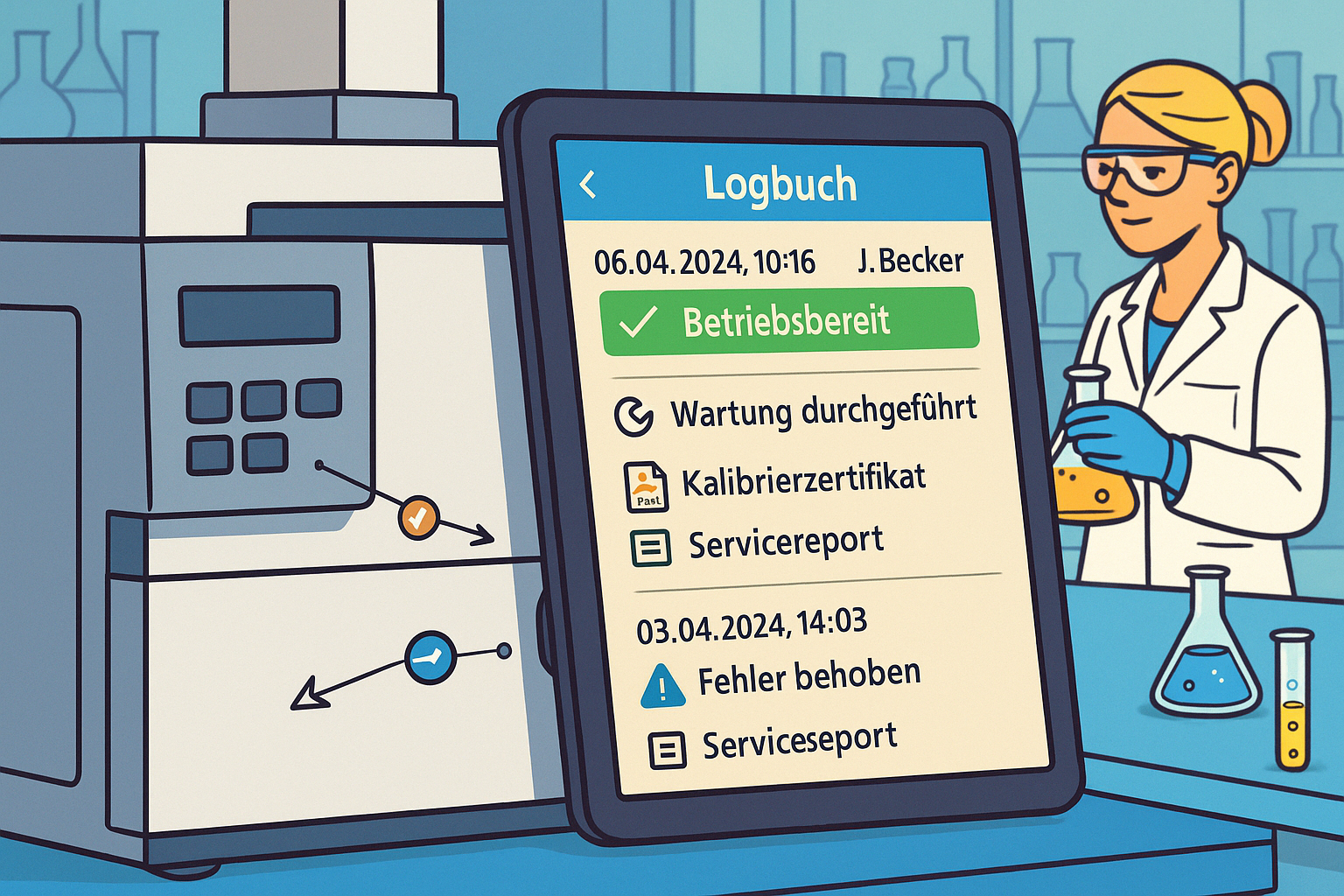
The logbook in everyday laboratory work—useful, necessary, but limited
Who isn't familiar with this? The logbook as a notebook, folder, or bound book—right next to, above, or on top of the laboratory equipment. This is where you record who worked on the equipment, what measurements were taken, whether maintenance was performed, what errors occurred, and how they were rectified.
This practice makes sense. It creates transparency regarding the use of a device, supports the traceability of measurement results, and forms the basis for quality assurance. At the same time, it is a regulatory requirement: standards such as DIN EN ISO/IEC 17025, DIN EN ISO 15189, and requirements from GMP and GLP environments demand traceable, complete documentation of device use throughout its entire life cycle.
However, this is precisely where the core problem begins. These notebooks, books, and folders contain valuable device and process knowledge—knowledge that is urgently needed in everyday life but is virtually unusable. It is difficult to read, cannot be searched, cannot be evaluated, cannot be linked, and is therefore inaccessible for automation or AI in the laboratory. What should actually be a central knowledge tool becomes a passive archive.
Typical problems with traditional paper-based logbooks
The weaknesses of traditional logbooks are not theoretical constructs, but rather everyday laboratory practice:
Handwritten entries are often difficult or impossible to read. Content is documented inconsistently—depending on the person, their mood on the day, and time pressure. Mandatory information is missing, pages are damaged or lost. Logbooks are kept with the equipment but are not centrally available, especially across locations or departments.
There is no structured error history. Maintenance, repairs, calibrations, and deviations are listed side by side without any systematic connection. Service reports, calibration certificates, and validation logs are stored separately—in folders, email inboxes, or file systems. In the event of an audit, the connection between the logbook, maintenance, calibration, and device status must be reconstructed manually.
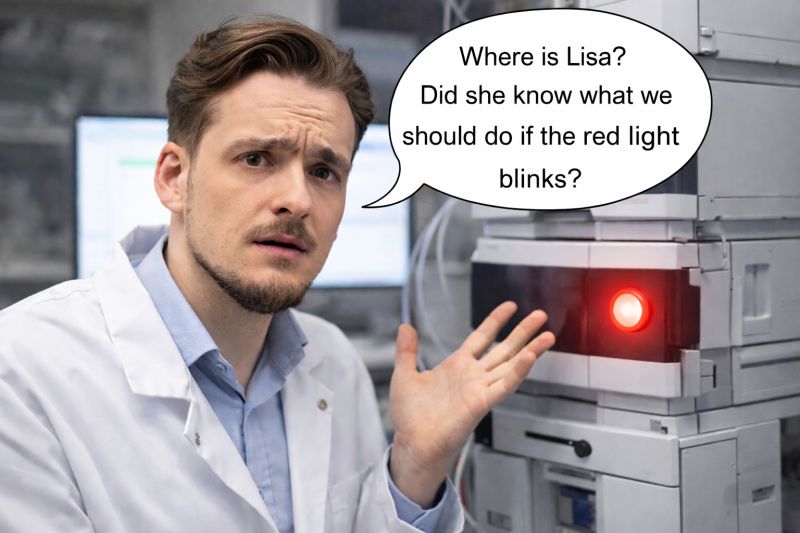
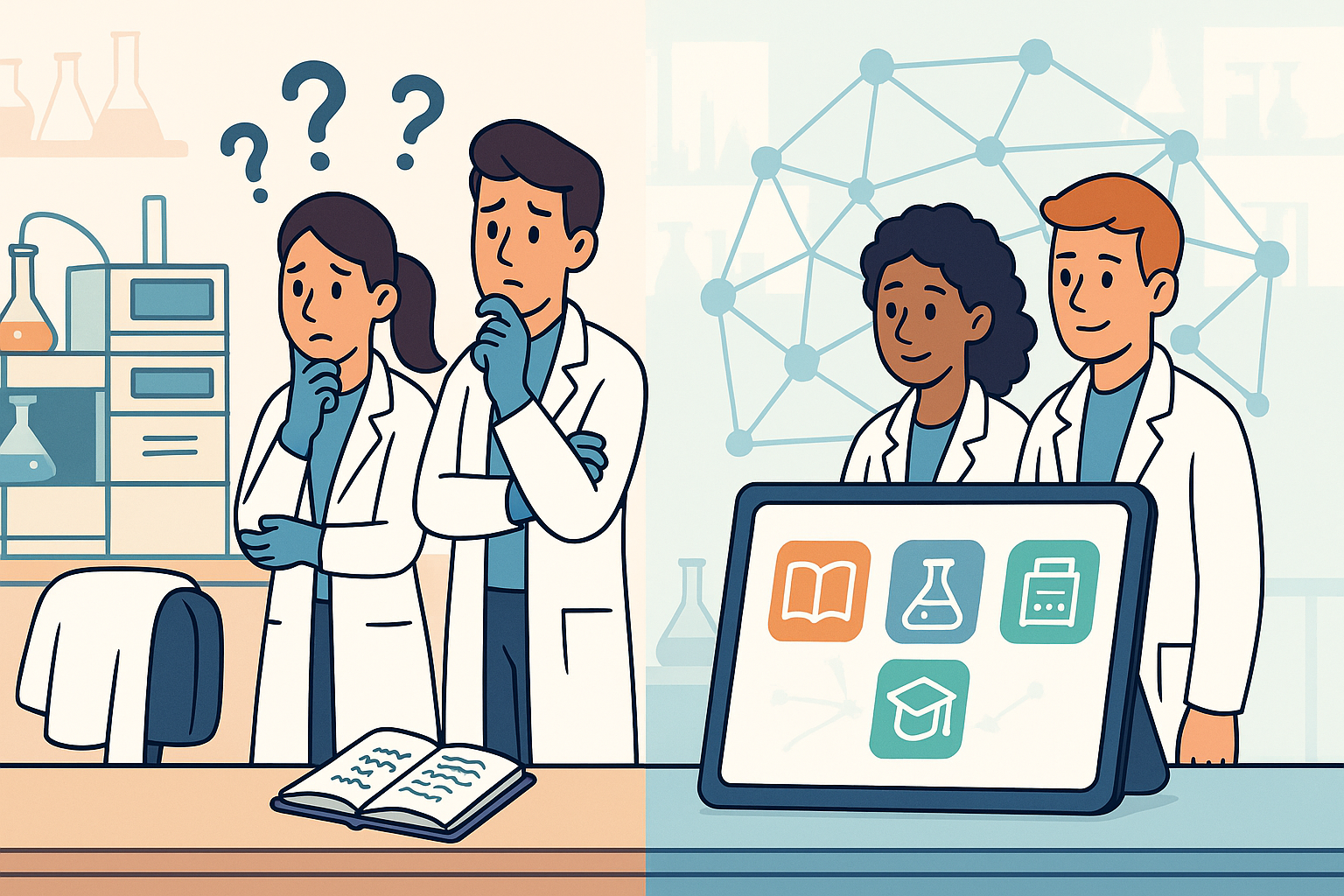
The loss of knowledge is particularly critical when there is staff turnover. Experiential knowledge disappears with employees, even though it may be formally documented. The audit effort increases continuously because information has to be searched for, compared, and validated.
What is a logbook—and why is it mandatory?
A logbook in the laboratory serves to document all device-related events without gaps. This includes usage processes, deviations, malfunctions, maintenance, repairs, and calibrations. The aim is to be able to trace at any time the condition of a device and the conditions under which measurement results were obtained.
The regulatory framework is clear. Both DIN EN ISO/IEC 17025 and DIN EN ISO 15189 require documented monitoring of test and measurement equipment. In GMP and GLP laboratories, too, the logbook is a central element of equipment control and traceability, especially for GLP equipment that has a direct influence on test results.
The ALCOA principle—Attributable, Legible, Contemporaneous, Original, Accurate—forms the benchmark for this documentation. Logbooks are one of the most important tools for putting this principle into practice. They must be clearly attributable, legible, contemporaneous, original, and accurate.
This makes it clear that logbooks are not just a nice-to-have, but an essential part of quality assurance.
Why Excel is not a sustainable solution
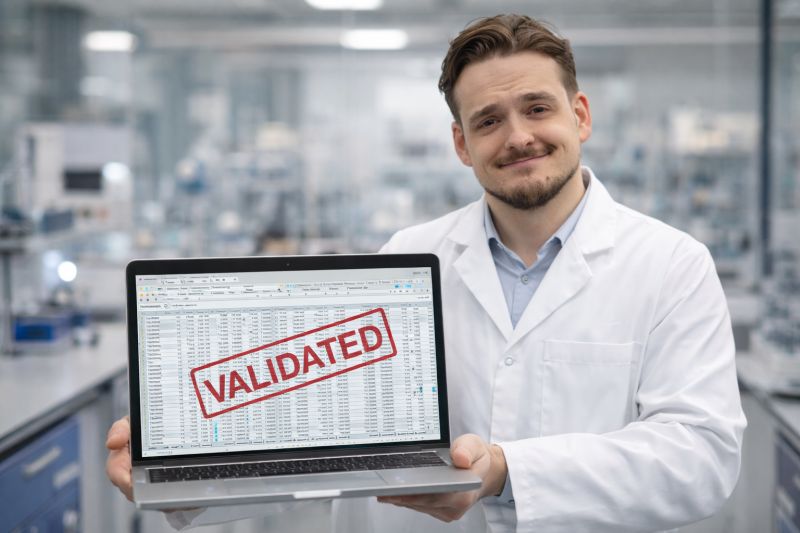
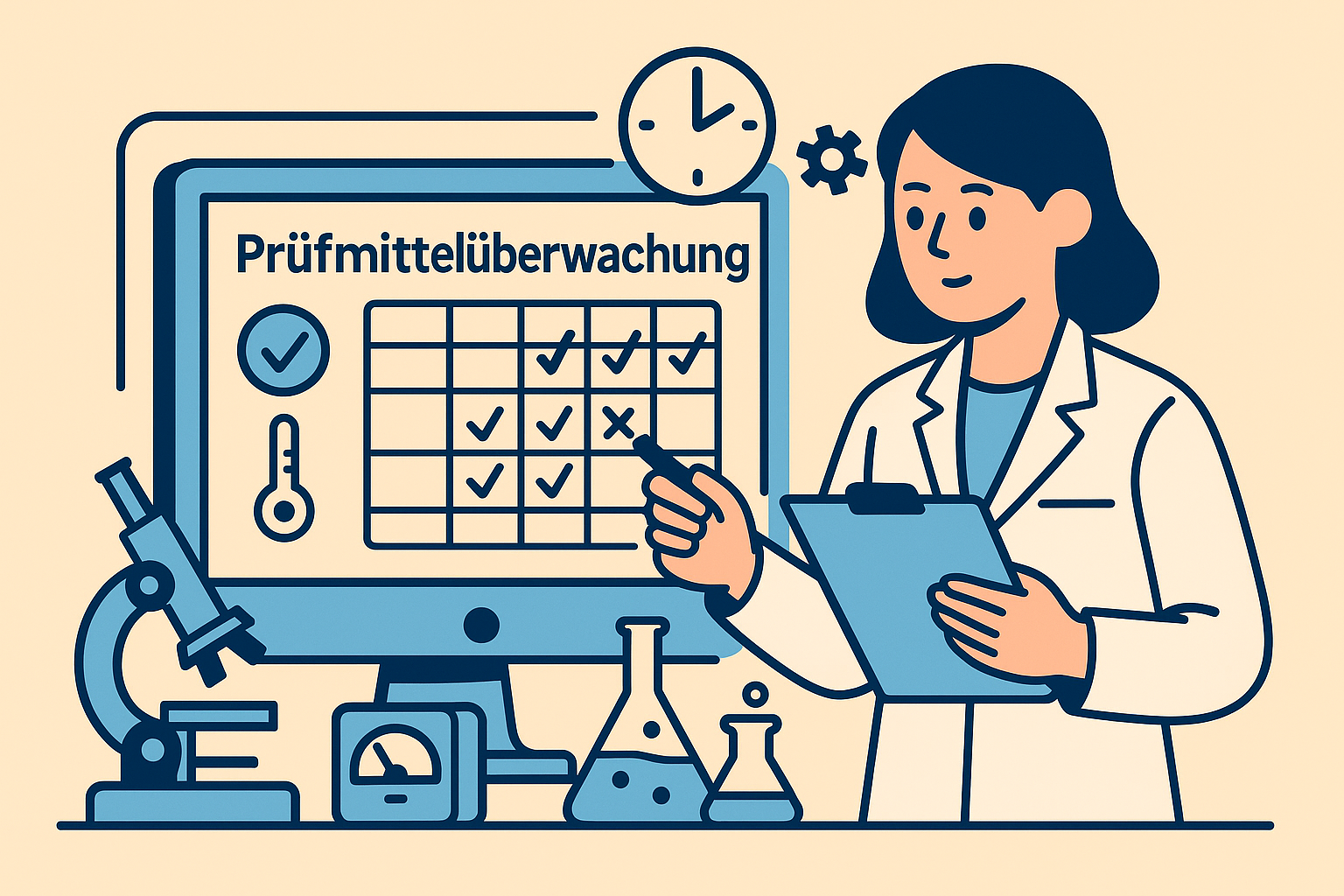
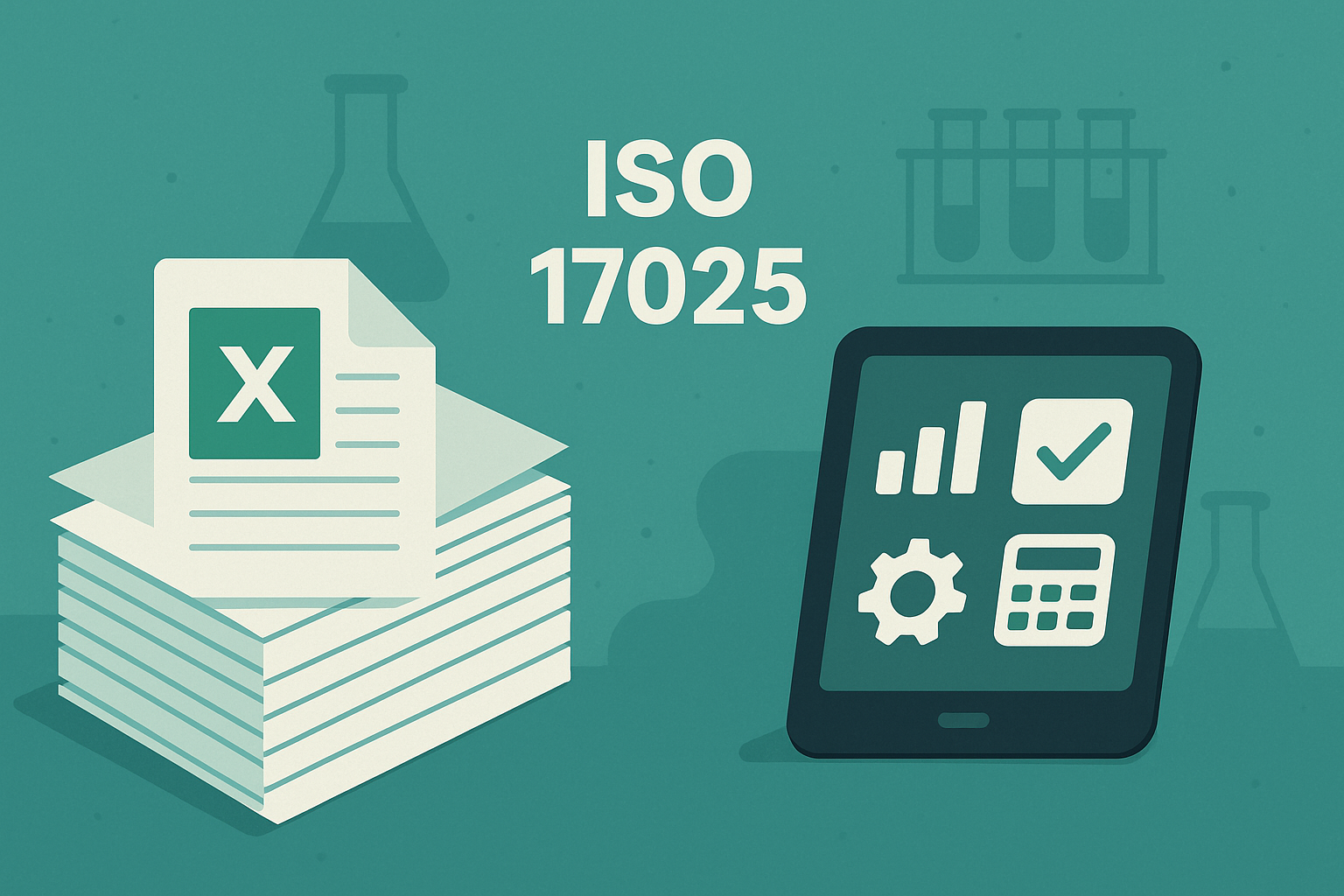
Excel is used in many laboratories as a pragmatic alternative. Tables for test equipment monitoring, maintenance lists, or simple calibration overviews can be created quickly and are easily accessible. However, Excel has structural limitations.
There is a lack of true data integrity. Changes can only be traced to a limited extent, and there is no audit-proof history. Responsibilities remain unclear, as entries can easily be overwritten or copied. Version and copy problems are commonplace, especially when several people are working in parallel.
Access control is rudimentary, and the device context is missing. Excel does not recognize any consistent link between logbook, test equipment management, measuring equipment monitoring, and test equipment monitoring calibration. This means that integrated test equipment management or measuring equipment management is not possible.
Excel can provide support, but it cannot replace logbook, test equipment, or laboratory management software. Free test equipment monitoring software can also help in certain situations, but it is usually limited to individual aspects and rarely meets long-term regulatory requirements.
[[image-1]]
Digital logbooks – what is fundamentally changing
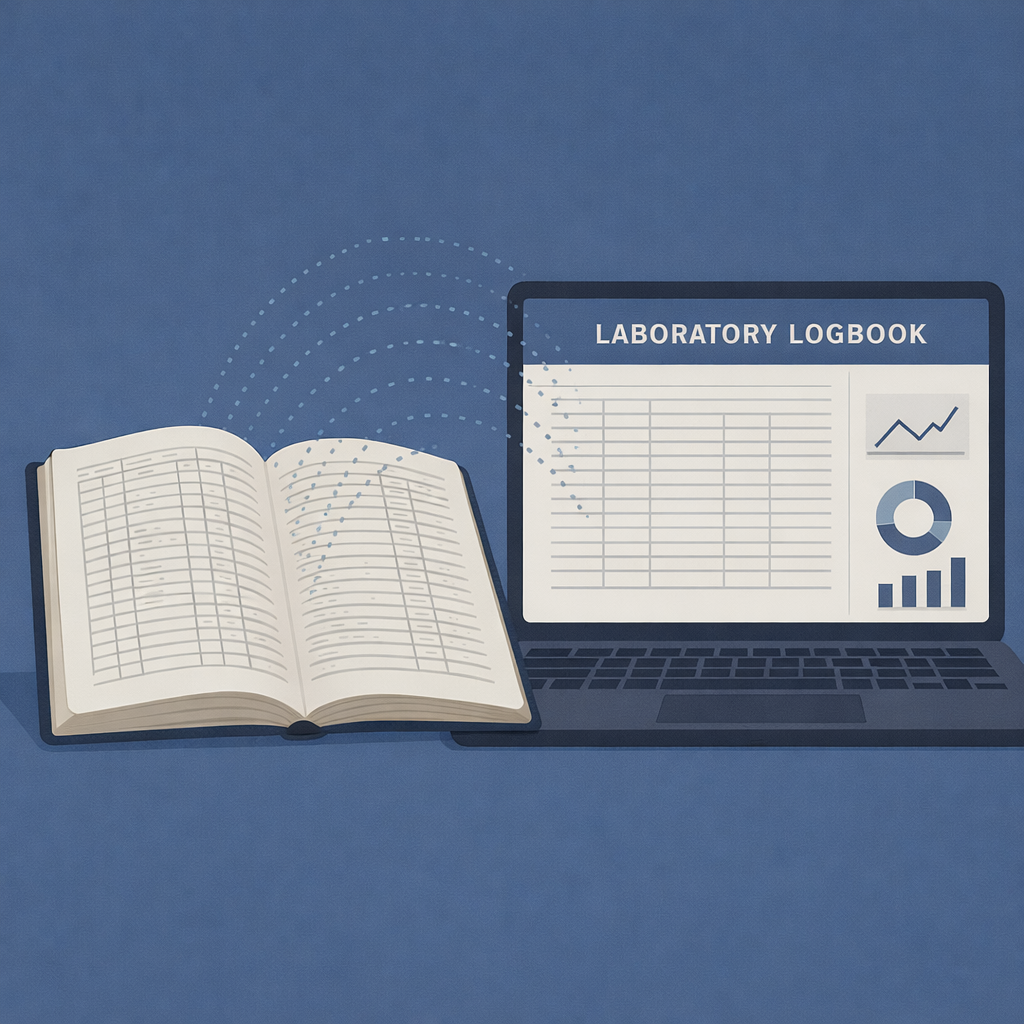
Digital logbooks are changing not only the medium, but also how we deal with device knowledge. They enable centralized, device-related documentation that is not limited to the physical location of the device. Information is recorded in a structured manner instead of being stored exclusively as free text.
A continuous history is created throughout the entire device life cycle—from commissioning to use, maintenance, calibration, and decommissioning. Digital logbooks can be linked directly to test equipment management, measuring equipment monitoring, maintenance and calibration planning, and device statuses.
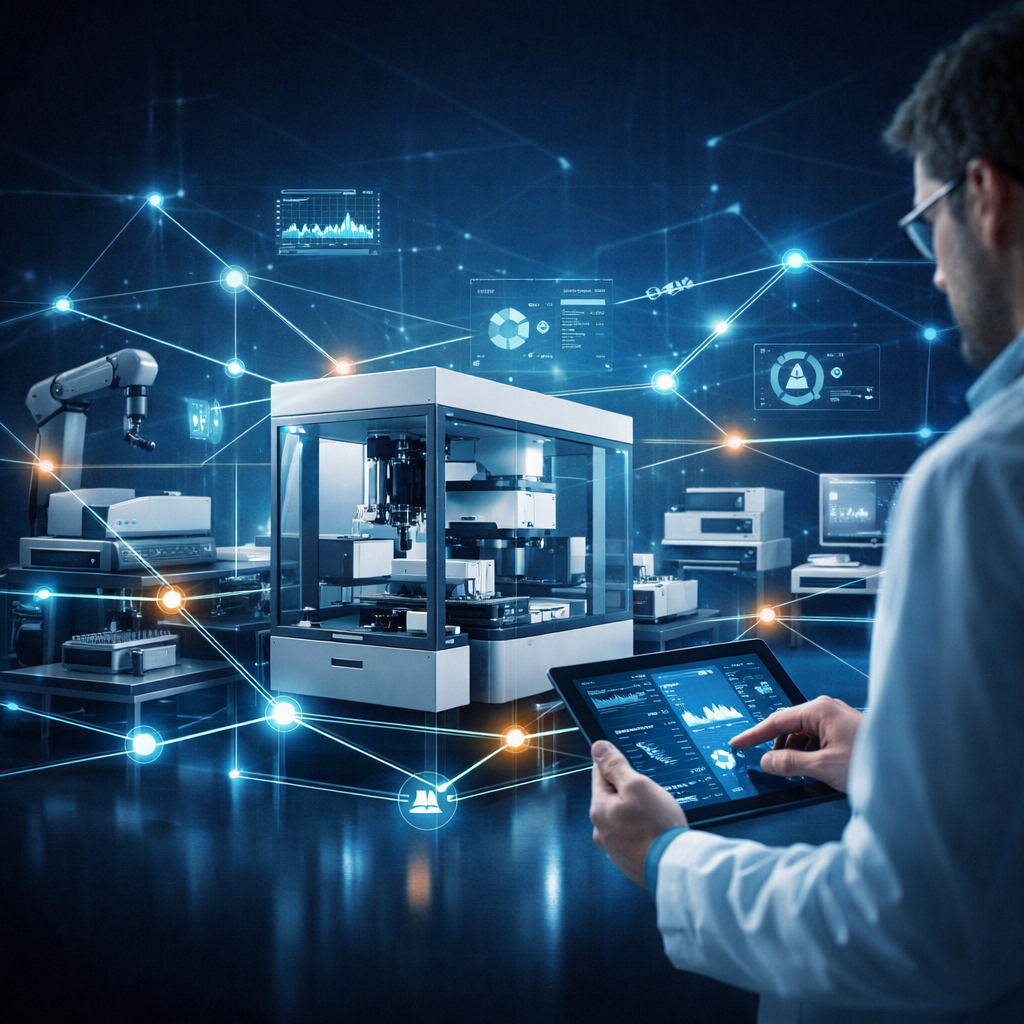
This makes them a core component of modern laboratory digitization. In this context, laboratory digitization does not mean automation for its own sake, but rather the targeted utilization of existing information within the framework of equipment management and laboratory management software.
Document linking & integrated action chain
A key added value of digital logbooks lies in their role as an integration layer. Logbook entries can be linked directly to relevant documents: service reports, maintenance records, calibration certificates, validation and qualification protocols such as IQ, OQ, and PQ, as well as deviation or error reports.
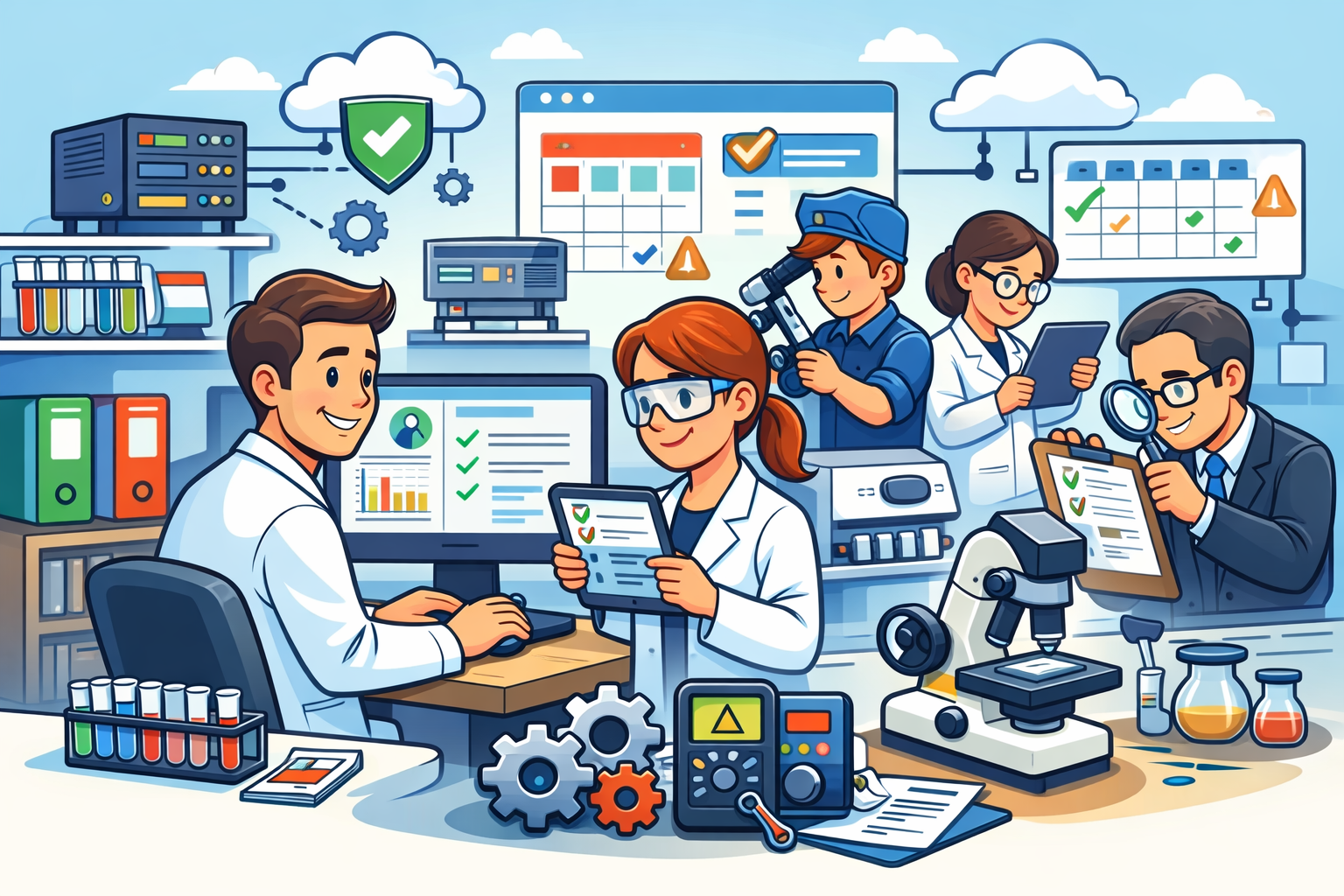
This creates an integrated chain of actions: an event is recorded, a measure is carried out, the evidence is documented, and the device status is updated. This closed chain is crucial for audit-proof documentation. It meets the requirements of DIN EN ISO 17025, GMP, and GLP and consistently implements the ALCOA principle.
Media breaks are eliminated. Information no longer has to be gathered from different systems, folders, or tables. Digital logbooks are therefore not digitized notebooks, but rather the central context for all device-related information.
Differences from paper and Excel
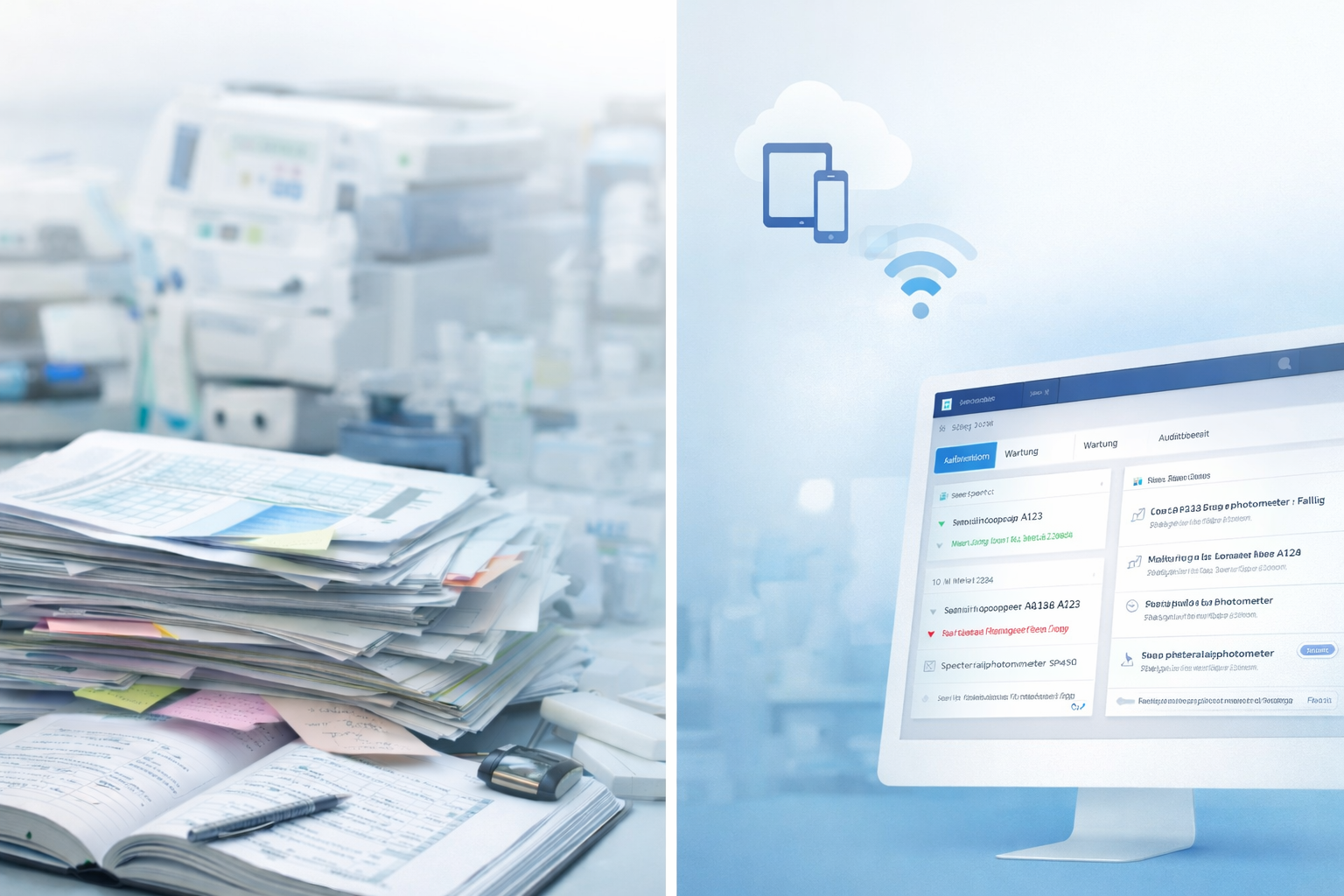
Paper-based logbooks can only reference documents. Excel can link files, but it is neither audit-proof nor context-related or audit-compliant. The result is fragmented evidence, high manual effort, and an increased risk of errors—especially under audit conditions.
Digital logbooks close this gap by combining structure, context, and traceability.
Digital logbooks as the basis for automation and AI in the laboratory
Structured log data is a prerequisite for any form of automation in the laboratory. Only when events, conditions, and measures are consistently recorded can trends be identified, errors be prevented, and assistance systems be used effectively.
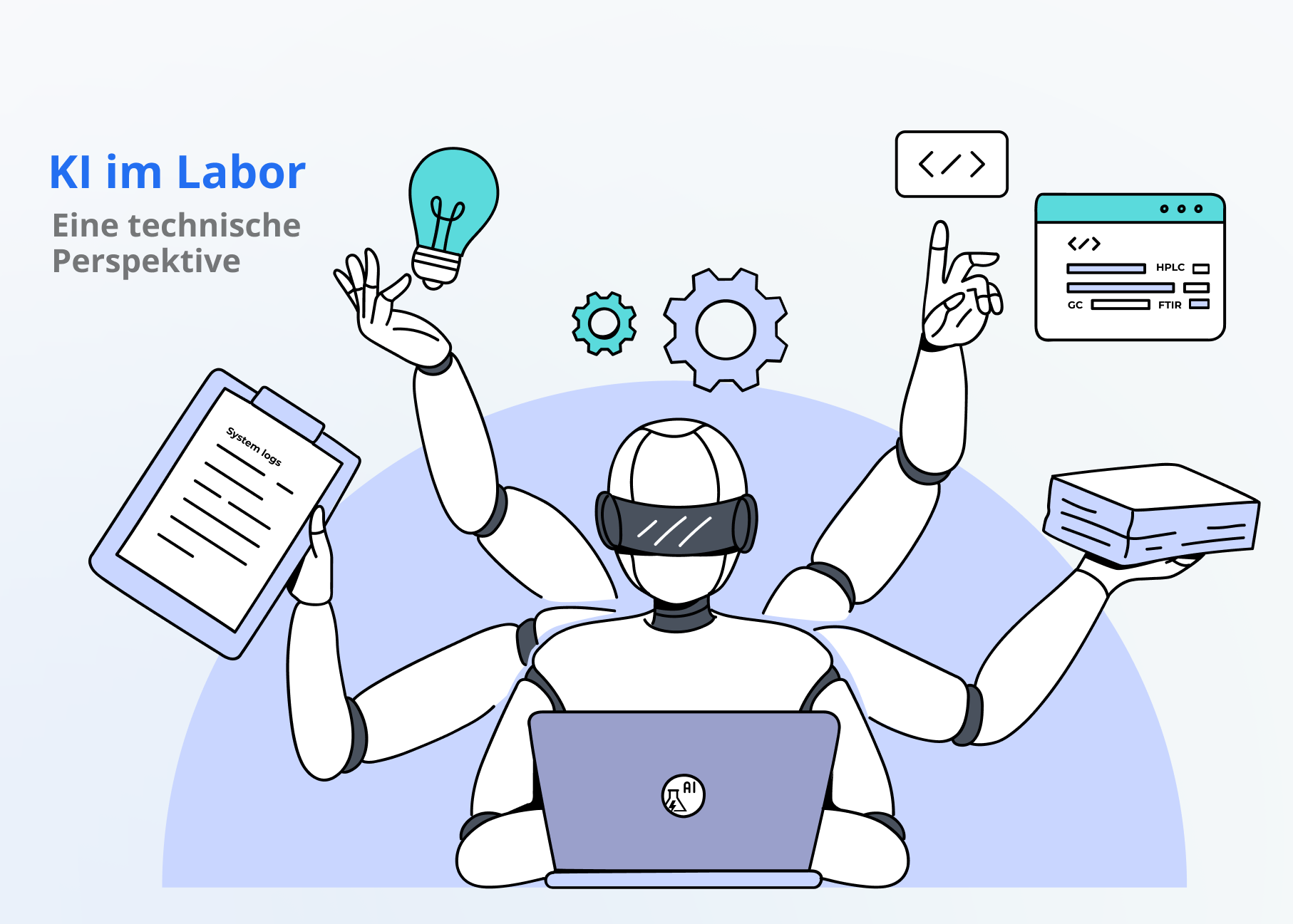
AI in the laboratory requires context, not unstructured text fragments. Paper and Excel are a dead end here. Digital logbooks, on the other hand, pave the way for laboratory automation without replacing existing processes. They make existing data usable and open up perspectives for data-based decision support.
Modern lab management software often integrates digital logbooks directly with test equipment monitoring, test equipment management software, and device management. The key point here is not the individual tool, but the principle: information is consolidated rather than distributed.
Conclusion
Digital logbooks are not an IT luxury. They are the basis for compliance, efficiency, knowledge retention, and future viability in the laboratory. Anyone who takes laboratory digitization seriously does not start with AI or automation, but with the logbook—where device knowledge is created and quality becomes measurable.

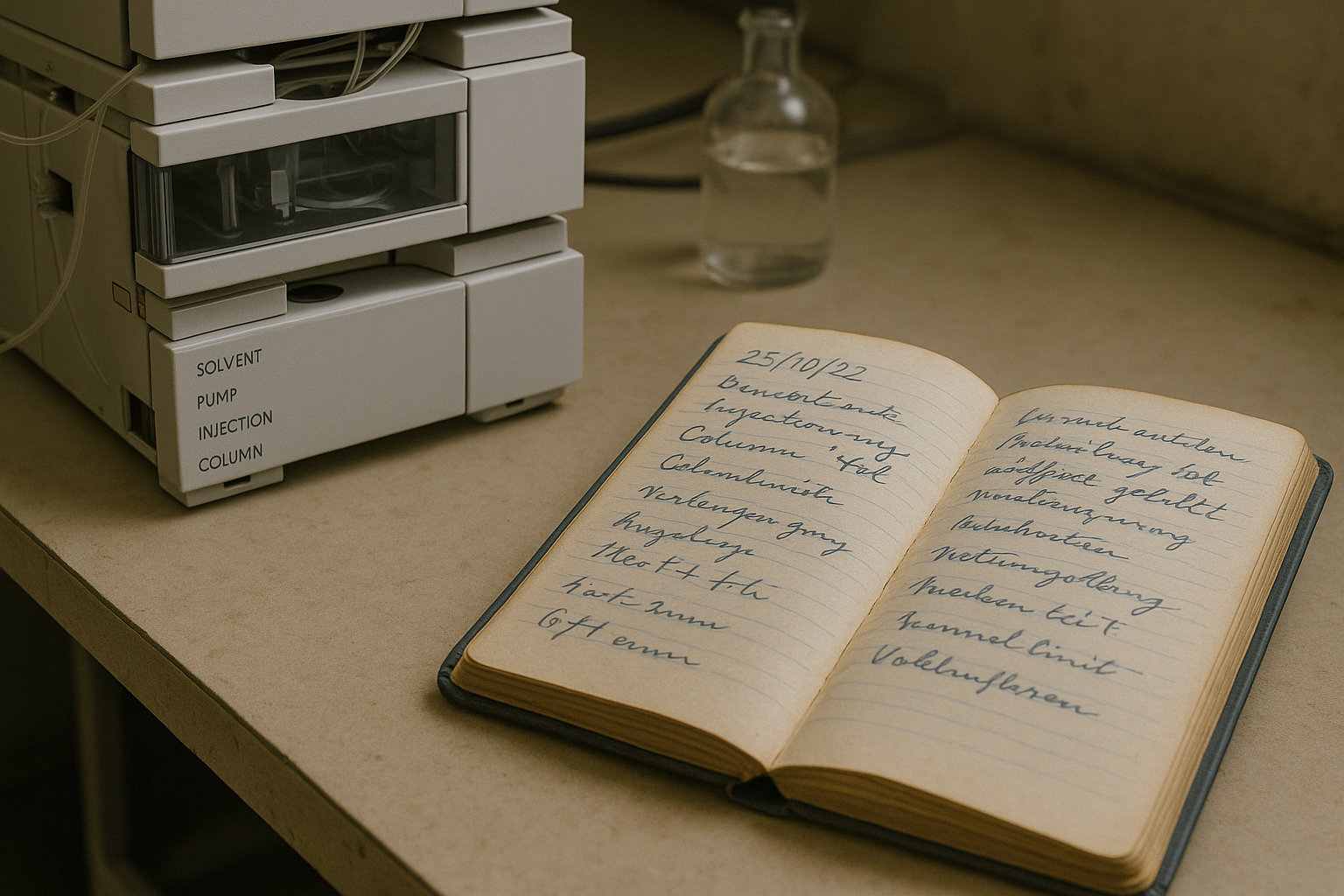
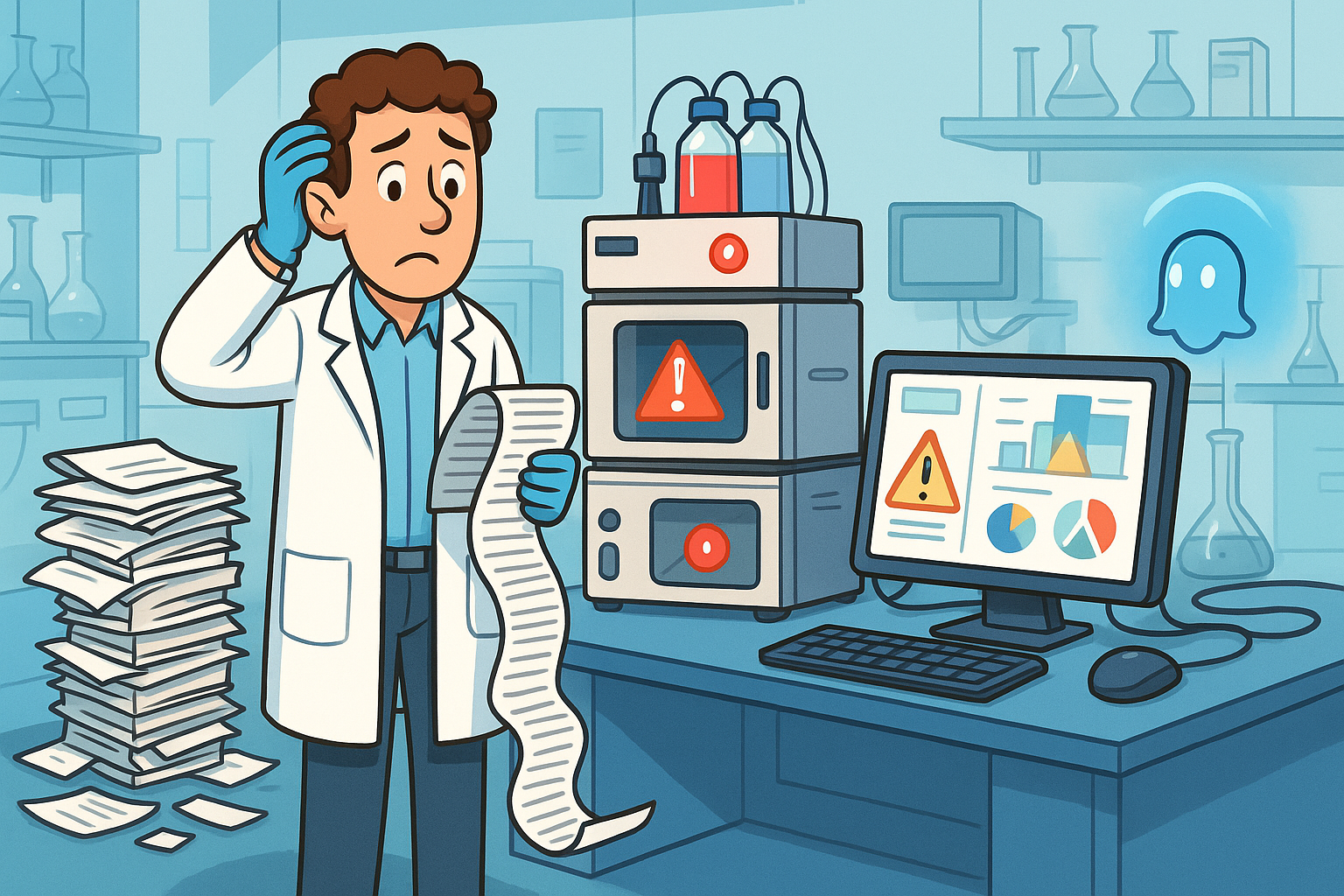
Handwritten logbooks are often created under time pressure and without a uniform structure during ongoing laboratory operations. Important information is available, but it is difficult to read, not linked, and can only be traced with great effort. What is intended to create order often leads to uncertainty and additional interpretation requirements in practice.
Frequently asked questions about digital logbooks in the laboratory
Do all devices in the laboratory have to keep their own logbook?
Yes. Device-specific documentation is required for all devices relevant to testing and measurement. This is the only way to clearly assign usage, maintenance, calibration, and deviations to a specific device, as stipulated by DIN EN ISO/IEC 17025, DIN EN ISO 15189, and GMP and GLP requirements.
Is a maintenance log sufficient without a logbook?
No. A maintenance log documents individual measures, but does not replace a logbook. Only the logbook establishes the complete connection between use, device condition, maintenance, calibration, and deviations, and enables consistent traceability.
How detailed should logbook entries be?
Log entries must be detailed enough to allow a knowledgeable third party to understand the process. This includes the time, the person responsible, the type of event, the measures taken, and, if relevant, the impact on the device status or measurement results. Superfluous details are not necessary, but clarity is.
What role do digital logbooks play in audits?
Digital logbooks significantly reduce the audit effort. Information is structured, complete, and directly linked to maintenance, calibration, and service documents. Auditors can check connections more quickly without having to rely on manual reconstruction.
Does the introduction of digital logbooks also make sense for smaller laboratories?
Yes. Smaller laboratories in particular benefit from clear structures, reduced documentation requirements, and improved knowledge retention. Digital logbooks help you work in compliance with standards using limited resources and reduce dependence on individuals.

LabThunder:
✅ Compliant with ISO 17025, GMP/GLP, and ISO 15189
✅ Digital logbooks instead of paper chaos
✅ Thunder AI central intelligence for errors & questions
✅ Smart & predictive maintenance prevents downtime
✅ Greater independence from external service providers
✅ Up to 50% fewer service calls
✅ Easy to use - no IT required
Contact us today for a free demo:





.jpg)
.jpg)
.jpg)

