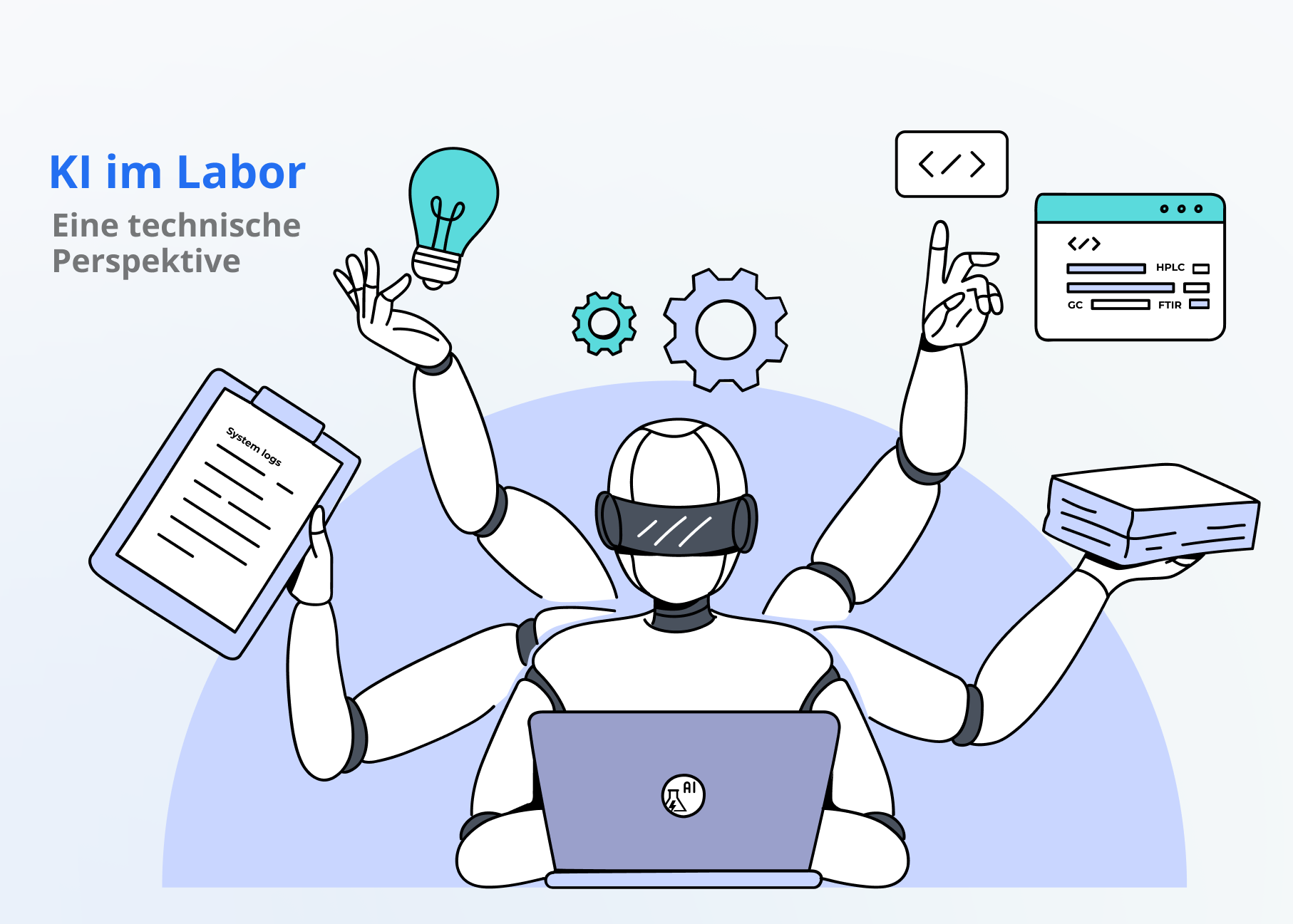
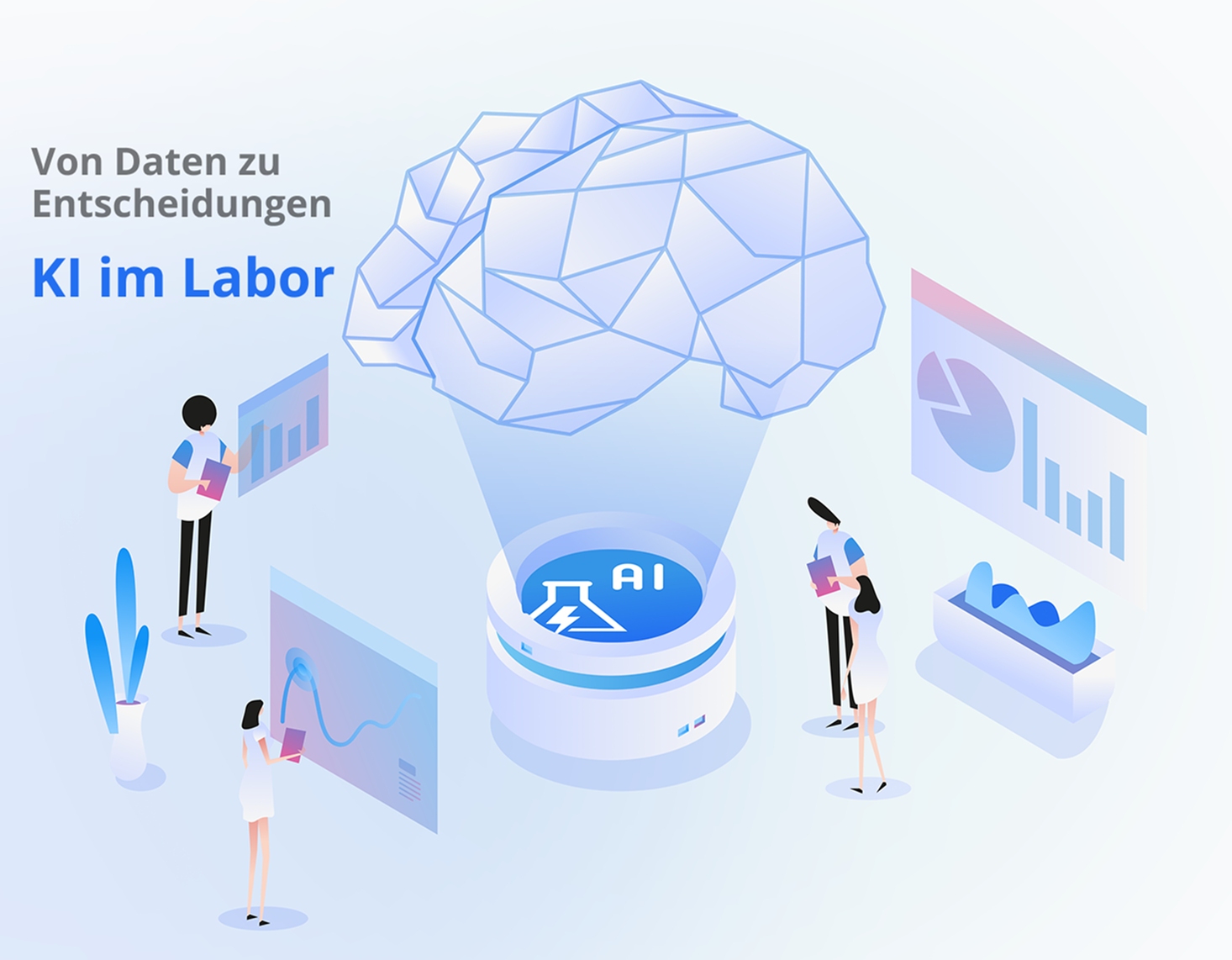
Artificial intelligence in laboratory environments is often either overestimated or underestimated. On the one hand, there is the fear of an opaque "black box"; on the other, the expectation of fully autonomous systems that independently control complex laboratory processes. As is so often the case, the reality lies somewhere in between.
From a technical perspective, AI in the laboratory is not a magical system, but a highly specialized layer of software. It connects existing laboratory IT, devices, data streams, and regulatory frameworks in a structured and controlled manner. Platforms such as LabThunder this principle in practice—not by replacing established systems, but by increasing the informational value of existing data.
This article examines how laboratory digitization through AI works technically, what core mechanisms underlie it, and why the real added value lies not in the model itself, but in contextual understanding.

1. Laboratory AI is domain-specific—not generic
A fundamental mistake in many AI discussions is the assumption that a general language model is automatically suitable for laboratory applications. In practice, the opposite is true.
Laboratory management software with integrated AI must be capable of:
- To "understand" technical and scientific terminology precisely
- Interpreting normative and regulatory references correctly
- Respect measurement logic, units, tolerances, and device behavior
- Consider the regulatory implications of each recommendation
The crucial distinction
The underlying language model is not intelligence itself—it merely provides the interaction level. The actual domain intelligence arises from structured knowledge spaces, metadata, relationships, and access control mechanisms.
Technically, this means that laboratory AI does not rely solely on free text interpretation. Instead, it operates on domain-specific semantic structures that represent the following:
- Device classes (e.g., HPLC, GC-MS, ICP-MS) for optimized equipment management
- Units, limits, and normative conversions
- Abbreviations and laboratory-specific nomenclature
- Relationships between systems, SOPs, logs, maintenance events, calibrations, and documentation
In systems such as LabThunder , technical language LabThunder therefore not only recognized, but also interpreted structurally within controlled knowledge domains.
2. Information linking: The real leap forward in laboratory digitization
The greatest productivity gains from AI in the laboratory do not come from "smarter answers," but from faster and more complete contextualization.
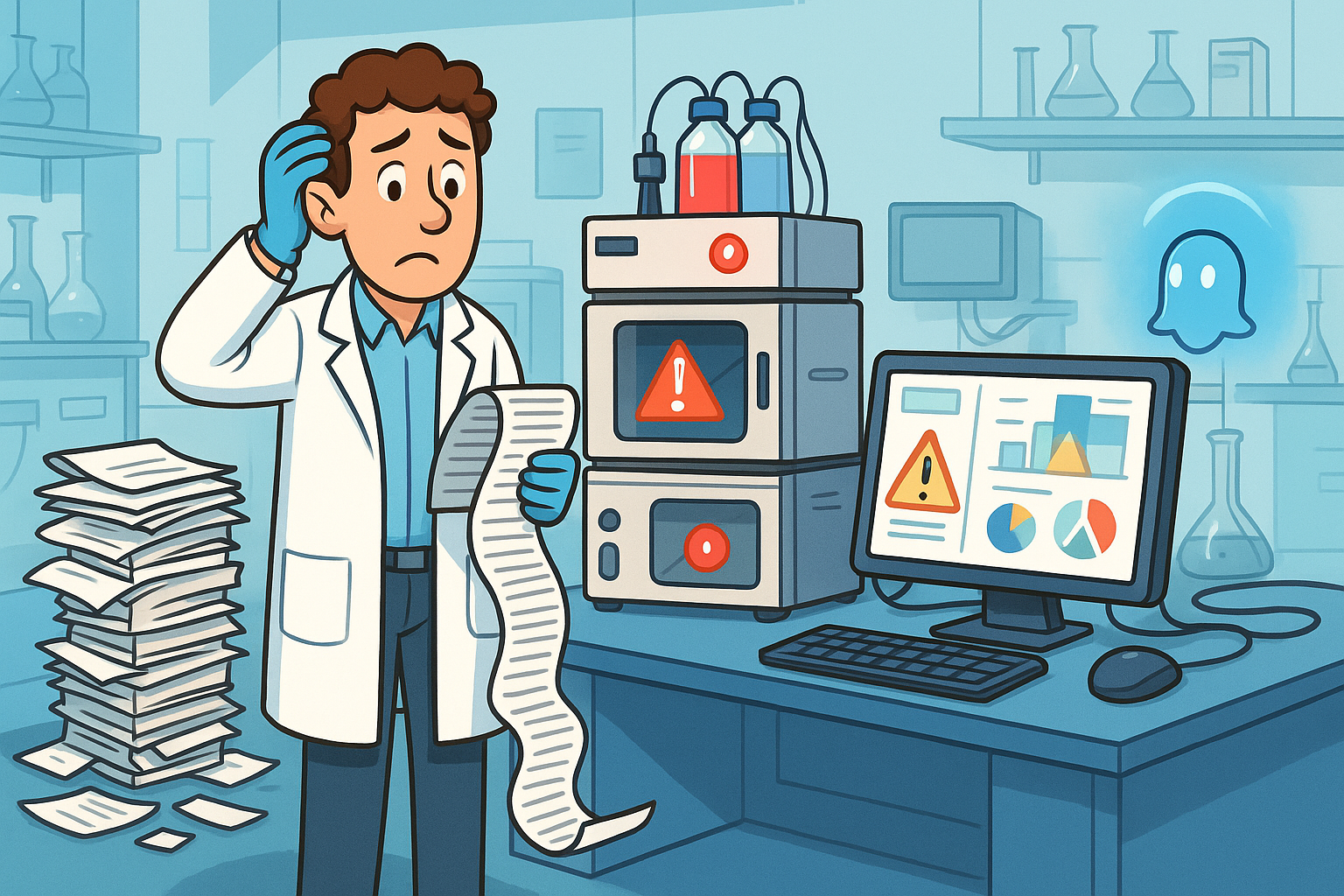
Classic laboratory reality
An experienced lab technician typically investigates problems by:
- Search system and device logs
- Review of maintenance and service reports
- Comparison of SOP versions
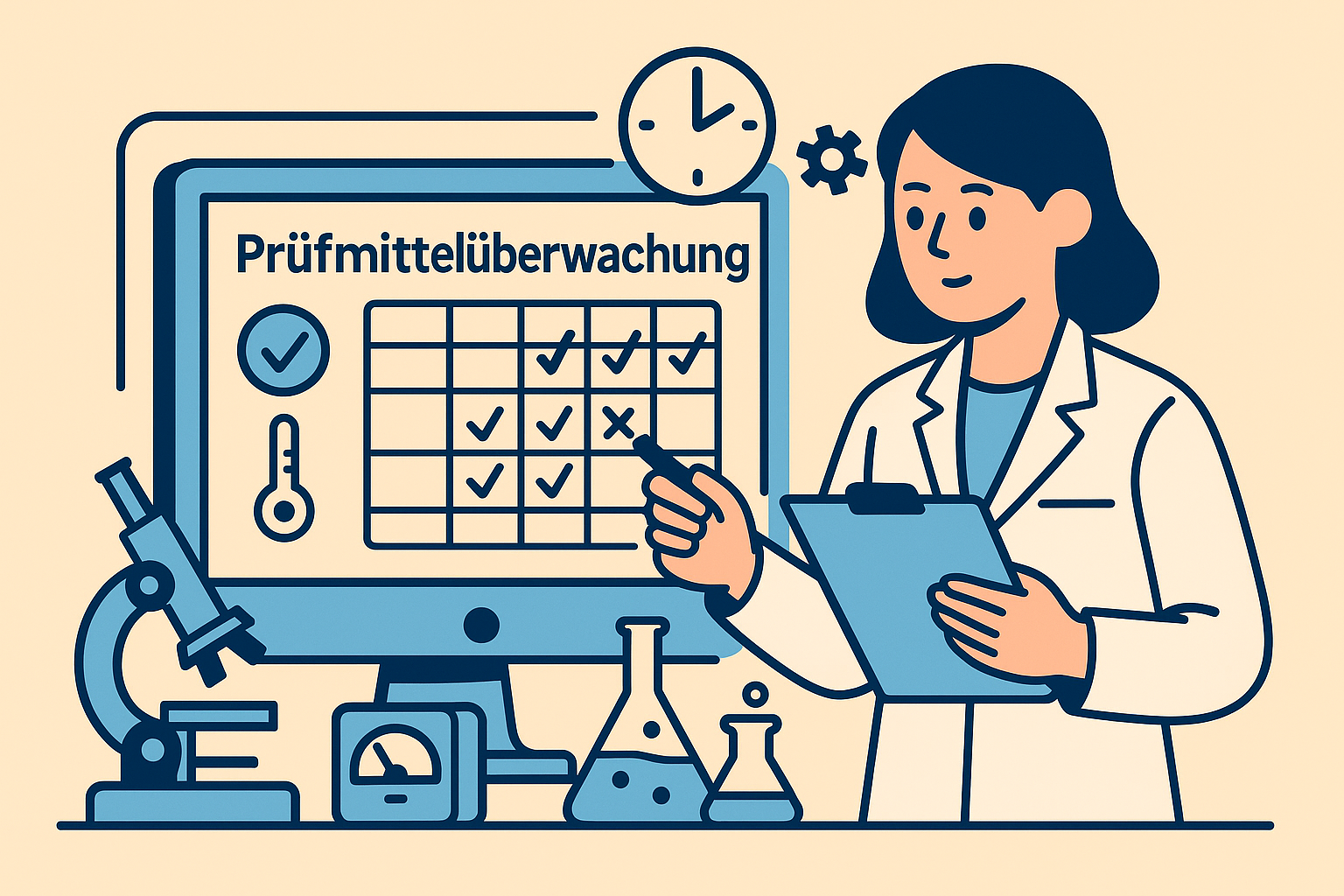
- Analysis of calibration and qualification histories
- Manual research in manuals and documentation
This approach is technically correct—but slow, fragmented, and heavily dependent on individual experience.
AI-based context aggregation in equipment management
Laboratory management software with AI capabilities acts as a context aggregator. It consolidates information across heterogeneous sources by linking:
- Temporal correlations (what has changed recently?)
- Document and version relationships
- Device status and operating history
- Maintenance, calibration, and incident timelines
This consolidation is not achieved through simple full-text search, but through structured metadata, timelines, and explicit object relationships. Devices, logs, documents, and service records are treated as connected information objects, not isolated files.
Important: This link does not necessarily require a dedicated graph database. Relational data models are already capable of supporting robust contextual reasoning when enriched with well-defined relationships, metadata, and temporal structures and designed accordingly.
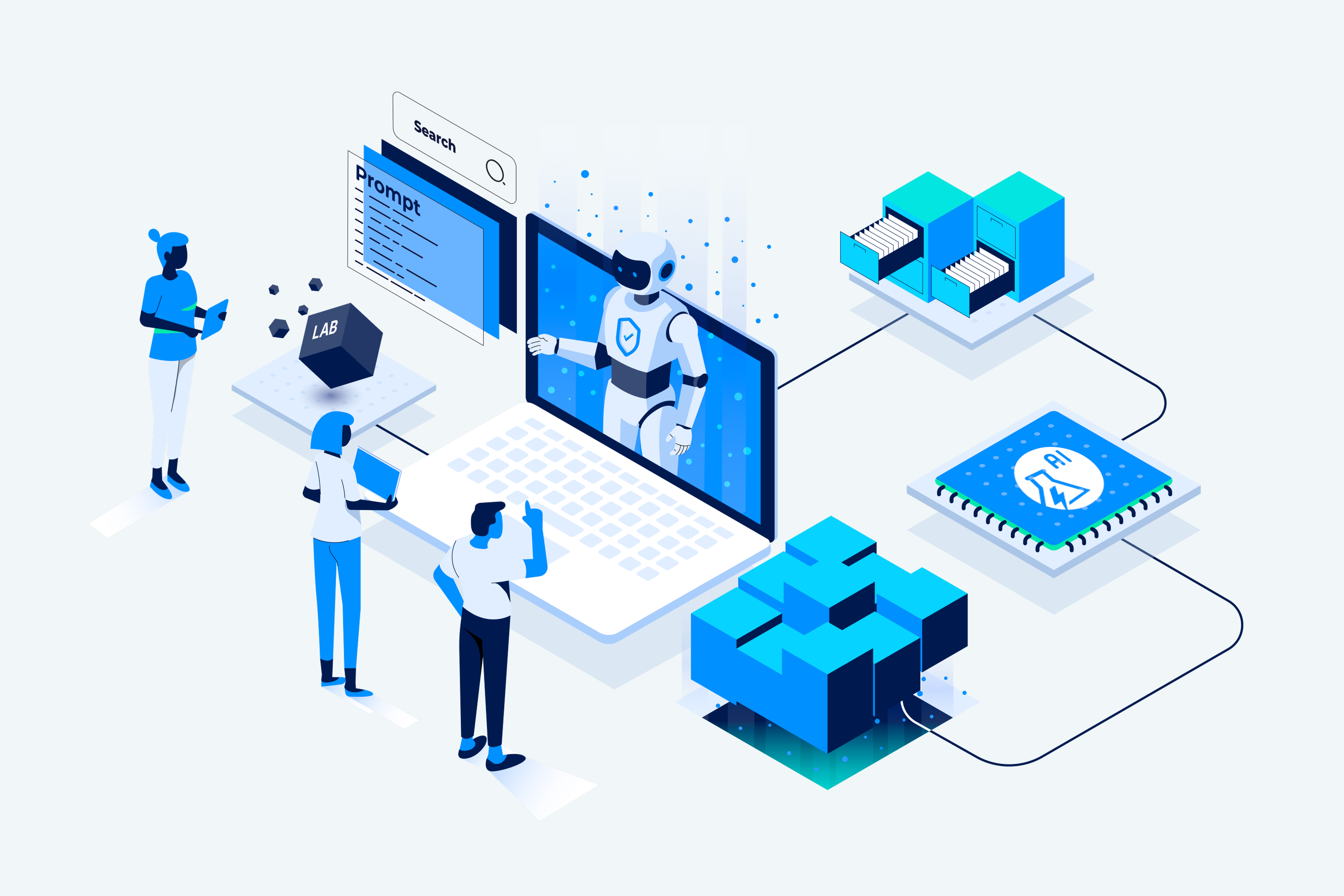
The real breakthrough lies not in intelligence itself, but in the ability to immediately establish context through deeply linked data.
3. Context-based reasoning instead of rule-based logic
A common misconception is that laboratory AI primarily operates on rigid if-else rule sets.
Example: "Why is my HPLC baseline unstable?"
A purely rule-based system would work through predefined checklists. Instead, context-aware AI in the laboratory evaluates:
- Historical baseline trends
- Recent maintenance or configuration changes
- Relevant troubleshooting sections in manuals and SOPs
- Similar incidents in the same laboratory context
Technically, the system constructs a space of hypotheses, ranks possible causes according to probability, and presents testable explanations—not absolute conclusions.
The crucial point
AI does not learn autonomously in the sense of making independent decisions. It evaluates known patterns within a strictly defined data and rule space.
This distinction is essential in regulated environments:
AI does not make decisions—it supports decisions in a transparent and verifiable manner.
5. Multi-client capability, data security, and GDPR-compliant AI use
In multi-organizational environments, multi-tenancy is not optional—it is fundamental.
Technical isolation for effective laboratory digitization
Each organization operates within a strictly isolated data context. Documents, logs, metadata, and analysis results are assigned to a single client and processed exclusively within this boundary.
The AI layer does not access a global data pool. It operates strictly within the authorized scope and role permissions of the user, thus reflecting what the user could also access manually.
GDPR-compliant AI operations in equipment management
From a data protection perspective, modern laboratory AI systems are designed so that:
- Sensitive data can be masked or excluded from model prompts
- Personal information is minimized or abstracted
- Access to confidential data is enforced at the retrieval level, not at the model level.
The language model itself does not retain any customer-specific data. Context is provided on a transient basis and only for the duration of the interaction, ensuring compliance with GDPR principles such as data minimization and purpose limitation.
6. AI as a layer of knowledge on top of existing infrastructure
From a CTO perspective, one principle is crucial:
AI does not replace LIMS, ELN, or QMS systems.
Instead, it acts as an intelligent layer of knowledge and interaction that:
- Reads data, but does not modify validated records without control
- Analyzes information, but does not make autonomous decisions
- Accelerate workflows without taking on responsibility
This non-invasive design makes AI compatible with:
- Existing IT landscapes
- Legacy laboratory systems
- Validated and regulated processes
In practice, modern laboratory AI systems complement LIMS environments by improving accessibility, interpretation, and contextual linking—without interfering with validated core functions.
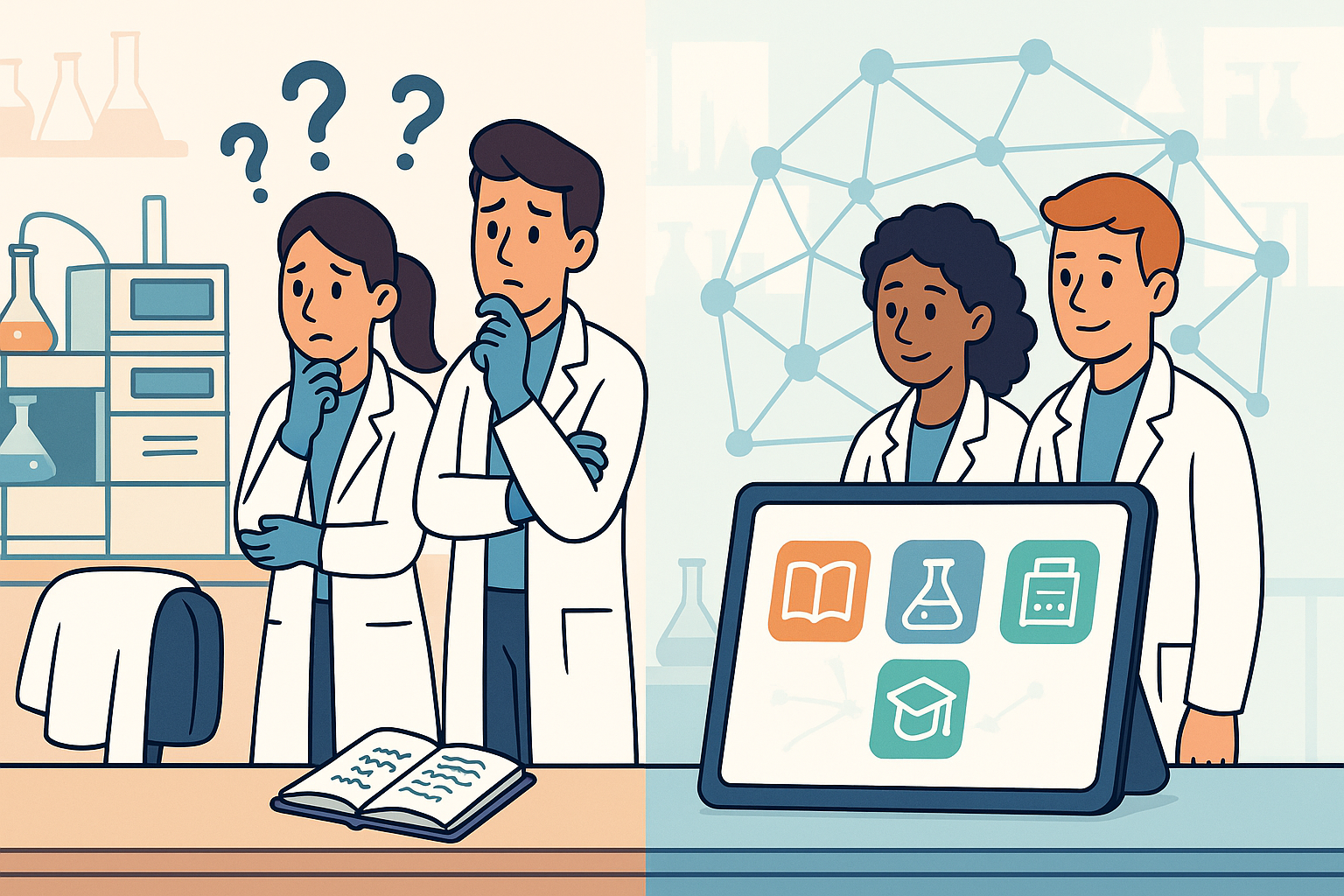
7. The real added value: democratization of knowledge in the laboratory through laboratory digitization
Over time, AI in the laboratory does more than just optimize processes—it reshapes organizational structures:
- Expert knowledge becomes contextually accessible
- Training periods are reduced
- Sources of error are identified earlier
- Decisions based on more complete information
This is not an abstract advantage, but a direct result of better-connected data.
Practical implications
Laboratory management faces a dual challenge: enabling data-driven, AI-supported work while maintaining strict regulatory compliance. Modern platforms for laboratory management software must therefore:
- Support exploratory and flexible workflows
- Enforce structured compliance where necessary
- Enable seamless transitions between both modes
- Maintain complete audit trails
Conclusion from a CTO perspective: The future of laboratory digitization
AI in the laboratory is neither science fiction nor a marketing gimmick. It is a technically sophisticated integration layer for effective equipment and laboratory management that:
- Can interpret technical laboratory language
- Builds reliable context
- Information intelligently linked
- Preparing decisions rather than replacing them
The real breakthrough will not come from ever larger models, but from a deeper understanding of the domain and disciplined system design.
The crucial question for laboratories in the context of laboratory digitization is therefore not:
"Is AI safe?"
Rather:
"Can we afford to continue working without contextual intelligence?"
Frequently asked questions about the use of AI in the laboratory
How does laboratory AI differ from general AI systems such as ChatGPT?
Laboratory AI is designed to be domain-specific and understands the technical terminology, normative requirements, and regulatory framework of the laboratory environment. While general language models provide the interaction layer, the actual intelligence comes from structured knowledge spaces with device classes, measurement logic, SOPs, and equipment management data. The AI operates on semantic structures, not just free text interpretation.
Will AI replace existing LIMS or ELN systems in the context of laboratory digitization?
No. AI acts as an intelligent layer of knowledge and interaction on top of existing infrastructure. It reads and analyzes data from LIMS, ELN, and QMS systems, but does not modify validated records in an uncontrolled manner. This non-invasive design makes laboratory AI compatible with legacy systems and validated processes, while improving the accessibility and contextual linking of information.
How is GDPR compliance ensured in AI-supported laboratory management software?
Modern laboratory AI systems operate with strict multi-tenancy and data isolation. Each organization operates in an isolated data context, and the AI only accesses authorized data. Sensitive information can be masked, personal data is minimized, and the language model itself does not store any customer-specific data. The context is only provided transiently for the duration of the interaction.
Where does AI offer the greatest added value in laboratory digitization?
The main advantage lies not in "smarter answers," but in the rapid creation of context through information linking. The AI aggregates data from device logs, maintenance reports, SOPs, calibration histories, and documentation in seconds—a process that would take hours to do manually. This speeds up troubleshooting, reduces training times, and democratizes expert knowledge throughout the laboratory.

LabThunder:
✅ Compliant with ISO 17025, GMP/GLP, and ISO 15189
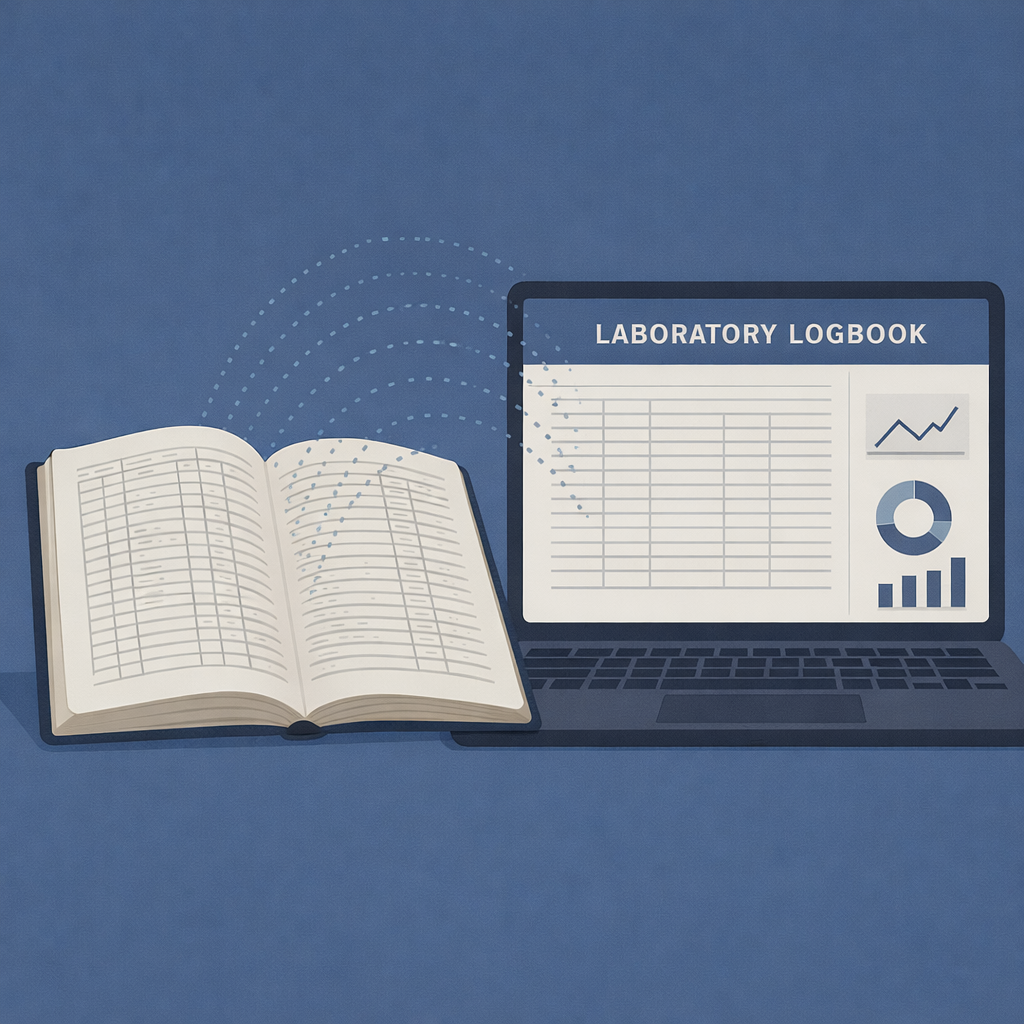
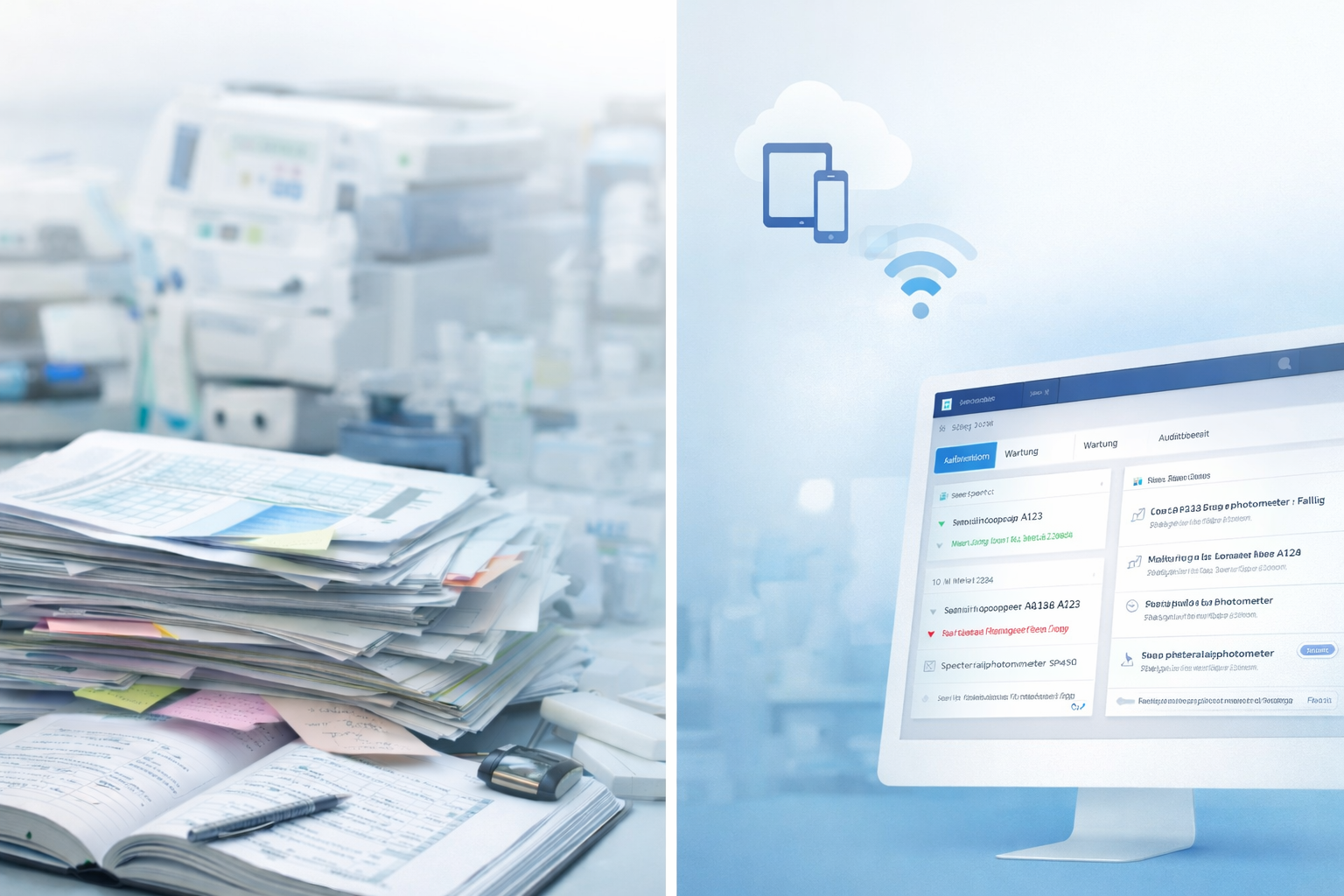
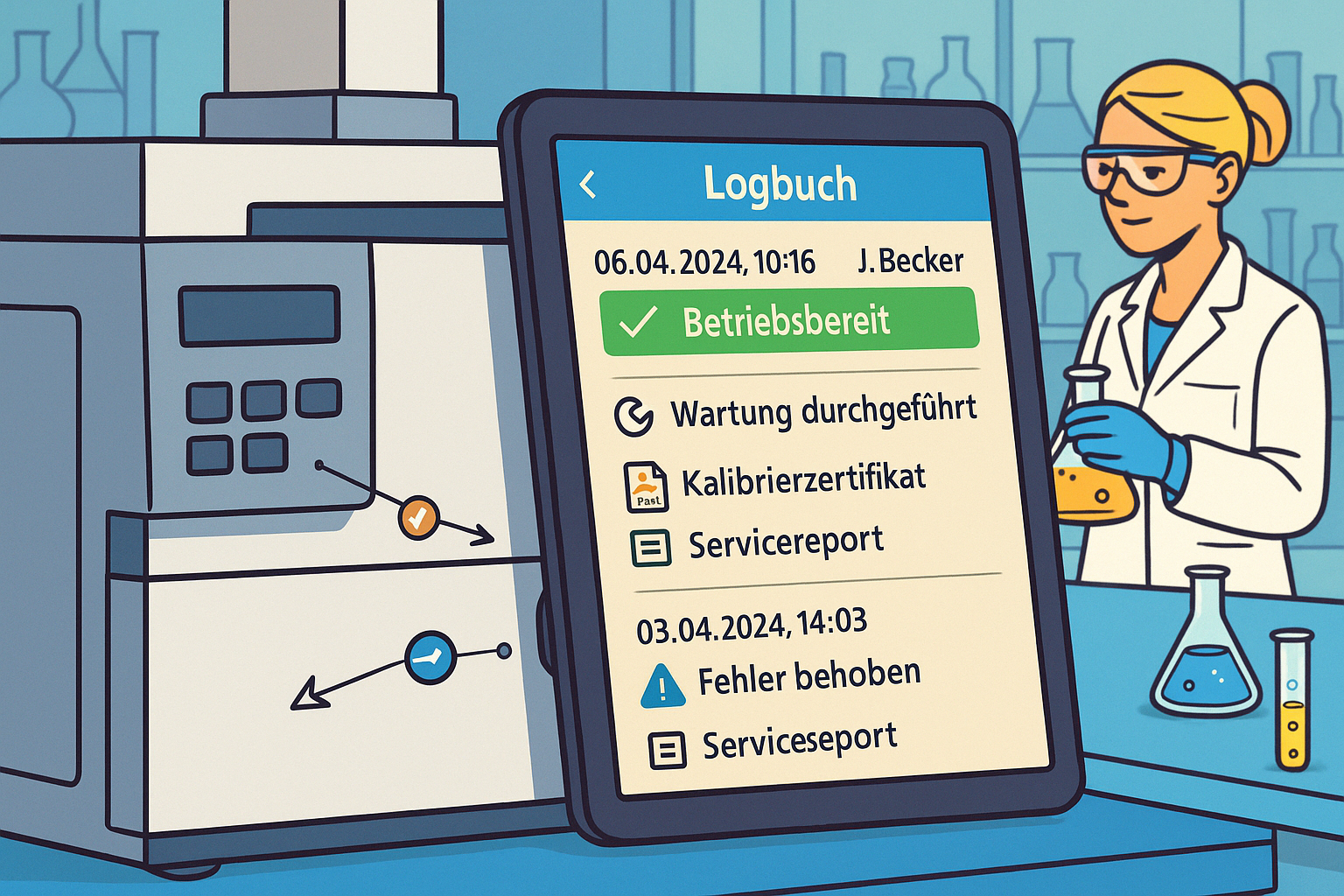
✅ Digital logbooks instead of paper chaos
✅ Thunder AI central intelligence for errors & questions
✅ Smart & predictive maintenance prevents downtime
✅ Greater independence from external service providers
✅ Up to 50% fewer service calls
✅ Easy to use - no IT required
Contact us today for a free demo:





.jpg)
.jpg)
.jpg)

