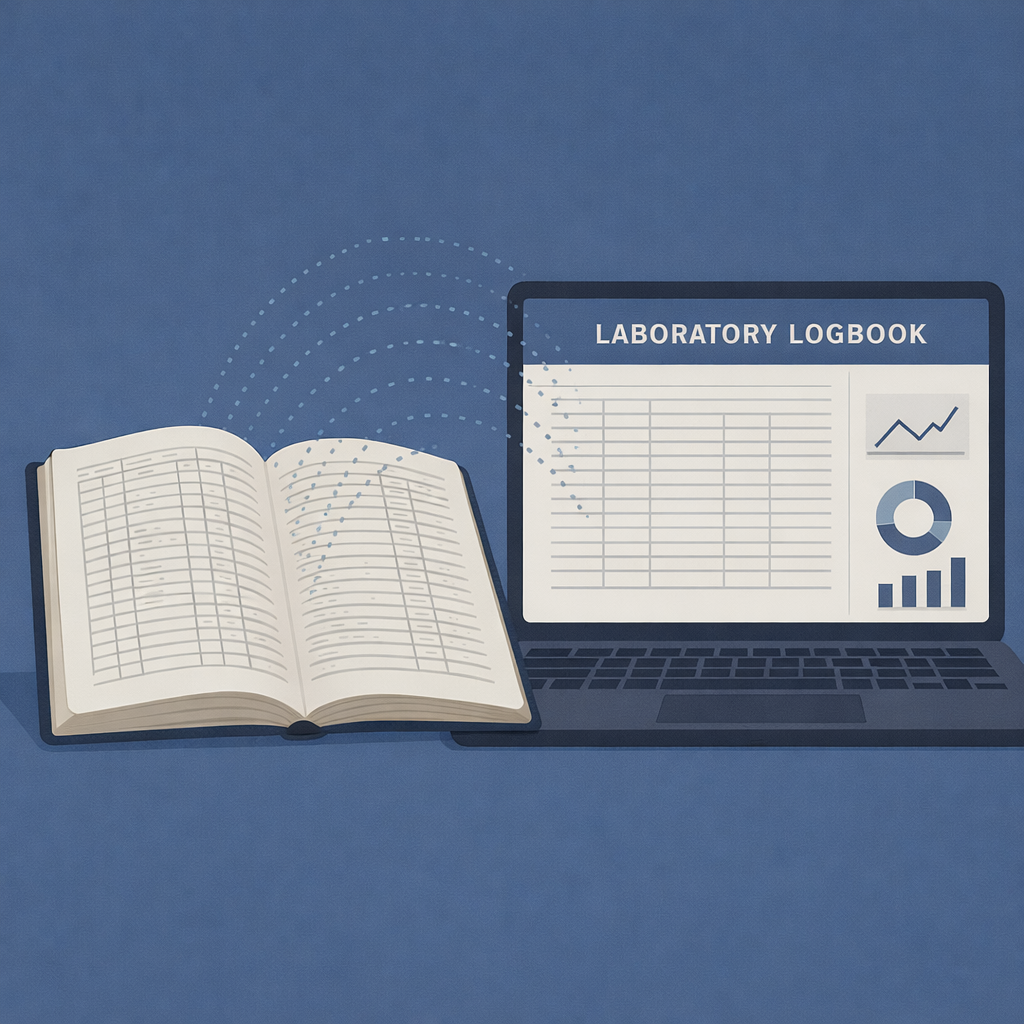
The Untapped Power of Your Technical Logbook – Identifying and Leveraging Its Potential

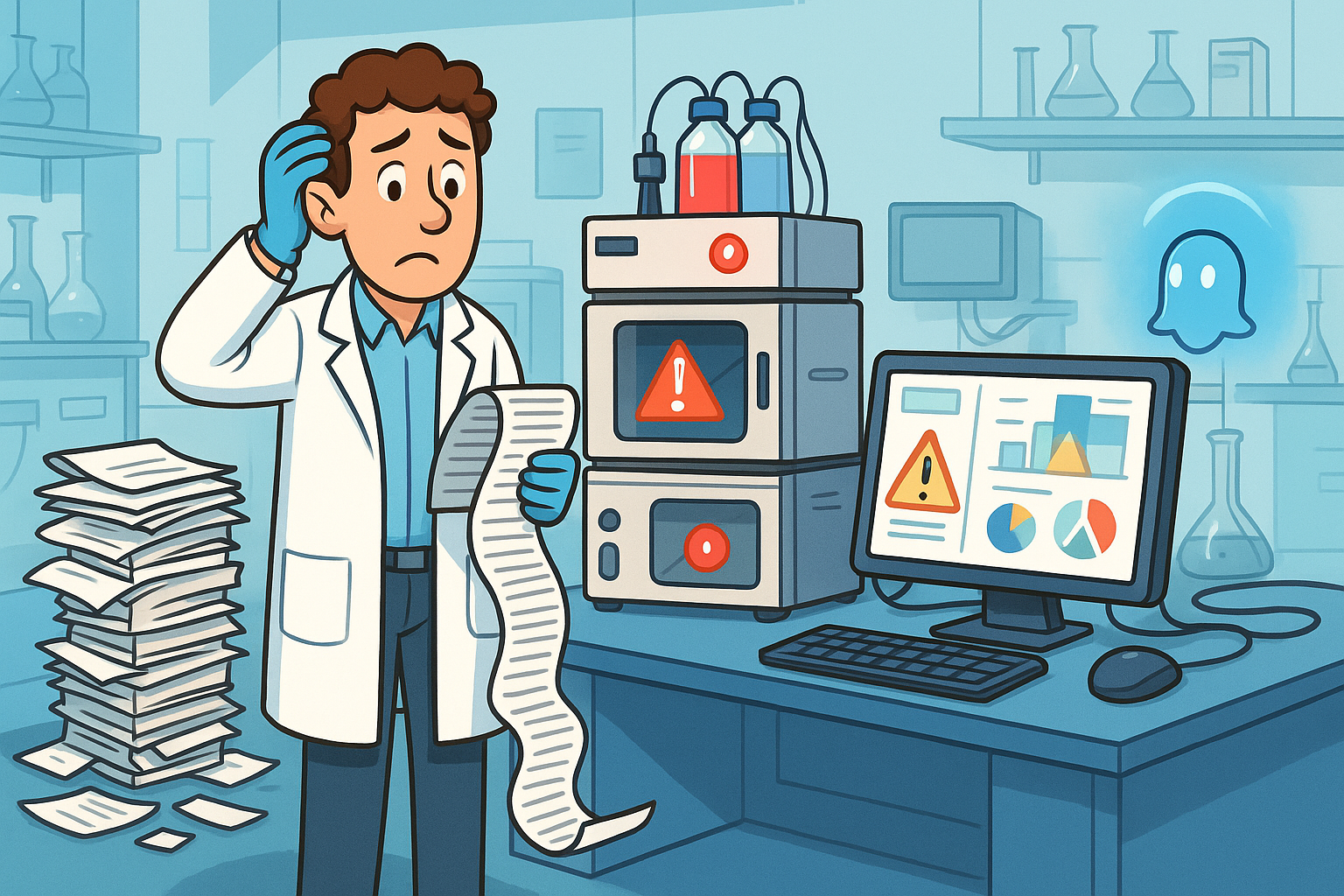
Do you keep a logbook—or do you actually use it? In many labs, the daily entries hold enormous potential that remains untapped. While lab logbooks have been a staple of lab work for decades, it is only through lab digitization that they are realizing their true potential.
The Untapped Power of Your Technical Logbook – Identifying and Leveraging Its Potential
Zuletz edited:
April 4, 2026

Warum Laborlogbücher oft unterschätzt werden

Das Problem: Vom Pflichtdokument zum vergessenen Archiv

In regulierten Laboren nach ISO 17025, ISO 15189 oder GxP sind technische Logbücher unverzichtbar für das labor qualitätsmanagement. Dennoch werden sie meist nur als Compliance-Werkzeug gesehen – ausgefüllt für Audits, dann vergessen.

Die häufigsten Hürden:

  • Handschriftliche Einträge sind nicht durchsuchbar
  • Papierlogbücher stehen isoliert von anderen Systemen
  • Auswertungen sind zeitaufwändig und werden vermieden

Die Lösung: Digitales Logbuch als teil des Labor-Wissensmanagements

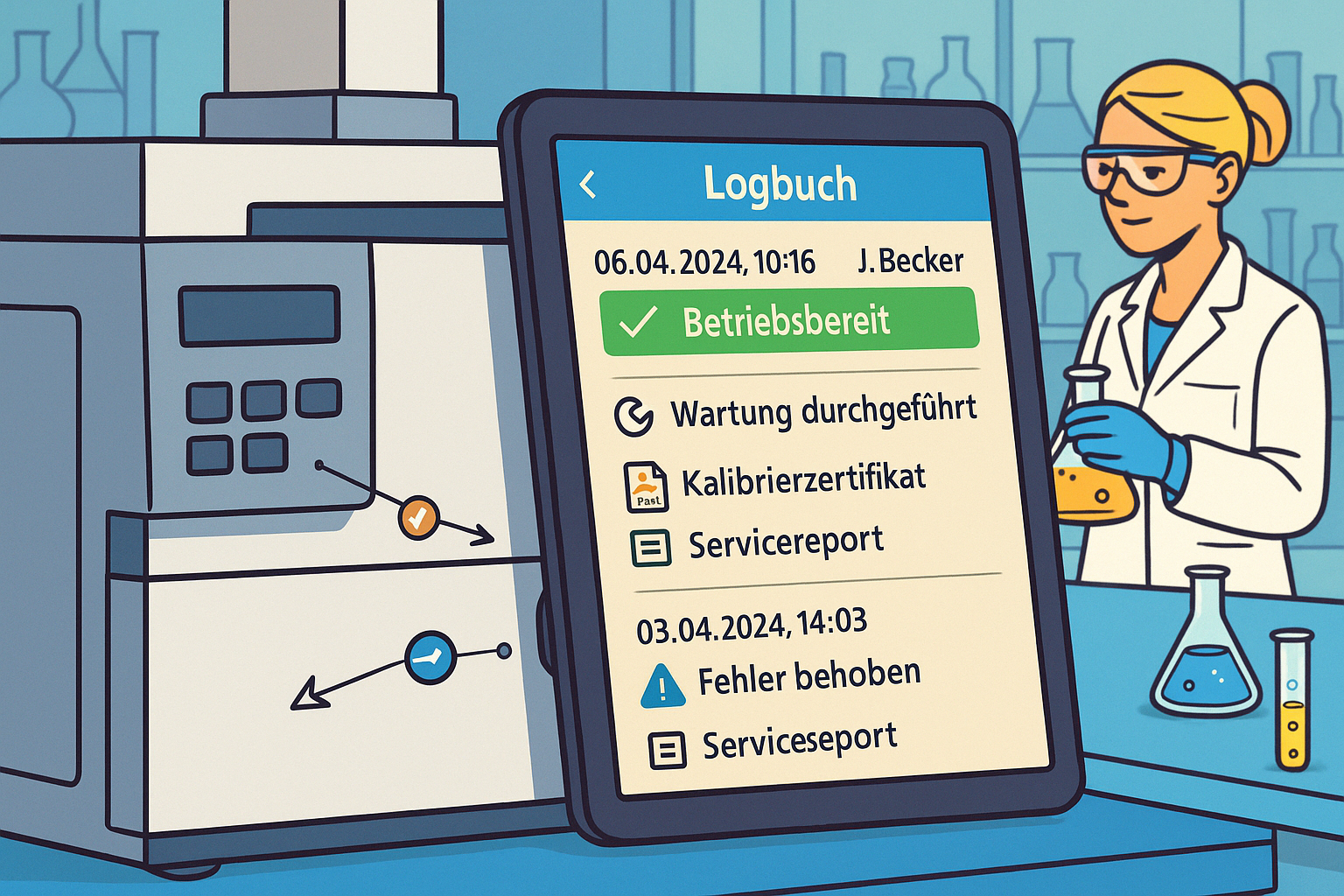
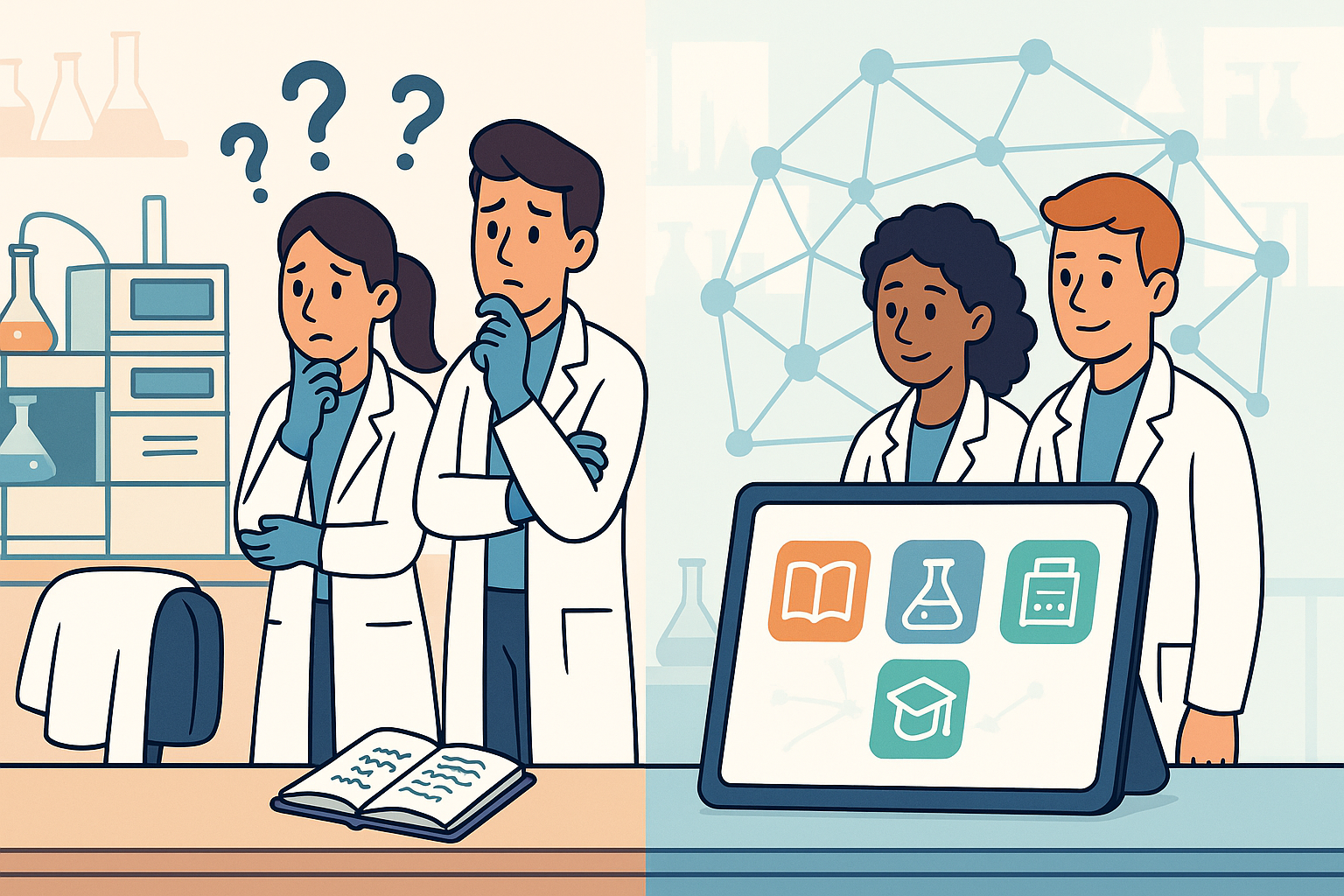
Ein digitales Laborlogbuch revolutioniert diesen Ansatz. Statt isolierter Dokumentation entstehen vernetzte Wissensdatenbanken mit Such- und Filterfunktionen. Moderne Lösungen wie LabThunder verwandeln Logbücher in zentrale Wissensplattformen – revisionssicher und jederzeit auswertbar.

Der Nutzen: Aus Pflichtdokumentation wird strategische Qualitätssicherung.

Das volle Potenzial moderner Laborlogbücher

Problem: Datensilos und verpasste Chancen

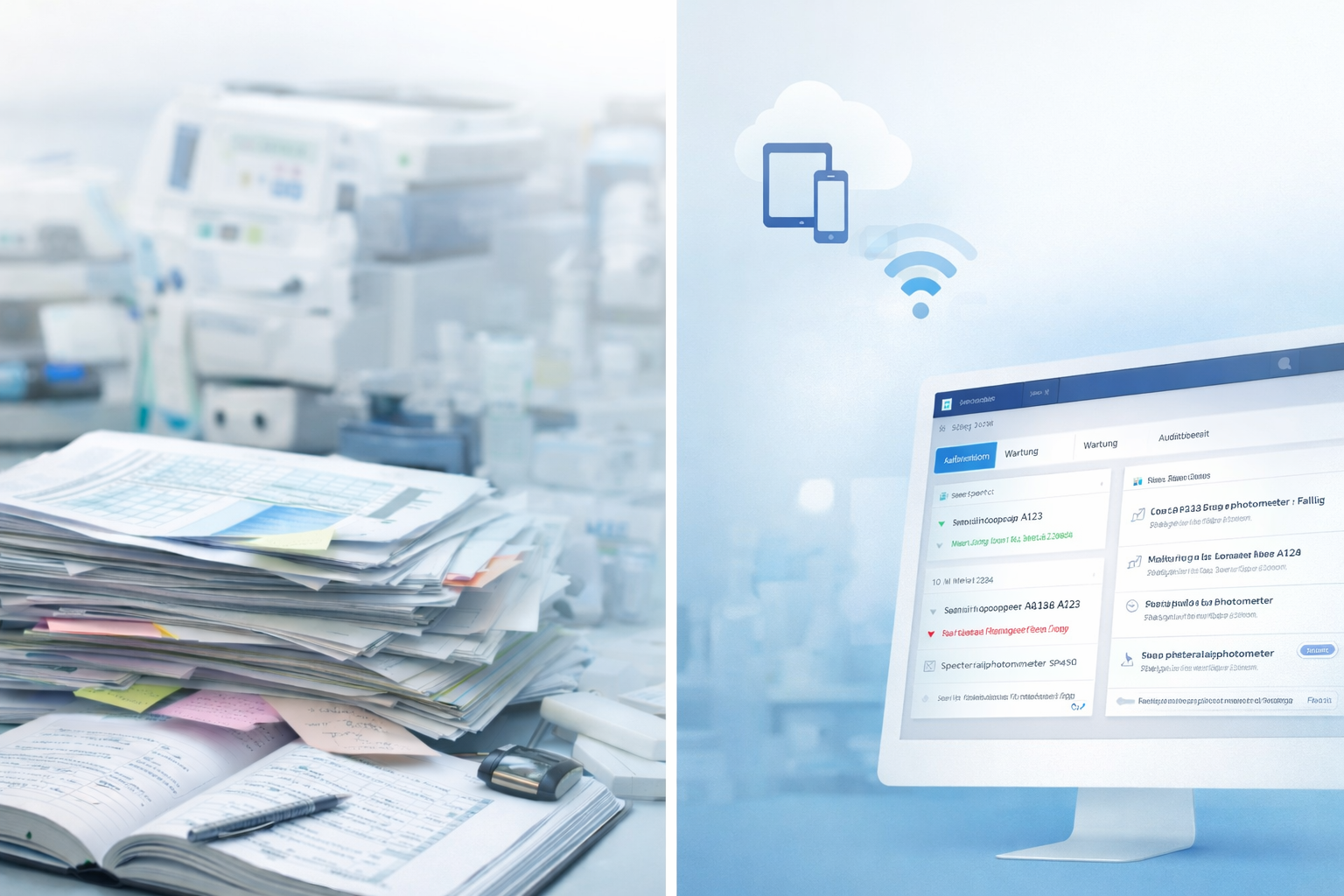
Klassische Papierlogbücher sind anfällig für Verlust, schwer durchsuchbar und ermöglichen keine automatisierte Auswertung. Wertvolle Informationen für Wartung und Qualitätssicherung bleiben ungenutzt.

Lösung: Intelligente Datenverknüpfung

Ein modernes digitales laborlogbuch verknüpft Einträge automatisch mit:

  • Wartungshistorien und -plänen
  • SOPs und Qualitätsdaten
  • Gerätedokumentationen
  • Analyseergebnissen

Nutzen: Predictive Maintenance ohne zusätzliche Sensorik

Das Besondere: Für predictive maintenance im labor sind keine zusätzlichen Sensoren nötig. Die Daten entstehen im normalen Arbeitsalltag – sie müssen nur richtig erfasst werden.

Erfolgsbeispiel: LabThunder nutzt bereits vorhandene Logbuchdaten, um Wartungsbedarfe vorherzusagen und Ausfallzeiten zu minimieren.

Custom Inputs – Der Schlüssel zur systematischen Datenerfassung

Problem: Unstrukturierte Datenerfassung

Freitexteinträge in Papierlogbüchern lassen sich schwer auswerten. Wichtige Parameter gehen in der Masse unter.

Lösung: Strukturierte Eingabefelder

"Custom Inputs" ermöglichen die gezielte Erfassung relevanter Parameter:

Typische Anwendungen:

  • Druck in Gasleitungen oder LC-Systemen
  • Wägegenauigkeit durch Prüfgewichtskontrolle
  • Quellenintensität im Massenspektrometer
  • Säulenrückdruck bei HPLC-Anlagen
  • Injektionszahlen für Kostenanalysen

Nutzen: Automatische QC-Regelkarten und Trendanalysen

Aus strukturierten Custom Inputs entstehen automatisch Regelkarten, die Abweichungen frühzeitig sichtbar machen – ohne zusätzliche Messtechnik.

Praxisbeispiele: Labor Digitalisierung in Aktion

Pharma: HPLC-Überwachung wird proaktiv

  1. Problem: Reaktive Wartung führt zu ungeplanten Ausfällen
  2. LabThunder-Lösung: Systematische Erfassung von Säulenrückdruck
  3. Nutzen: Schleichende Anstiege deuten Wochen vor dem Problem auf Säulenverstopfung hin.

Lebensmittel: Qualitätssicherung wird präventiv

  1. Problem: Waagenabweichungen betreffen ganze Produktchargen.
  2. Lösung: Regelmäßige Prüfgewichtskontrolle mit automatischer QC-Diagramm-Erstellung.
  3. Nutzen: Abweichungen werden erkannt, bevor sie Chargen beeinträchtigen.

Umwelt: Geräteausfälle werden vermieden

  1. Problem: Ungeplante MS-Ausfälle stören Analysenabläufe.
  2. Lösung: Kontinuierliche Überwachung der Quellenintensität und Systemdrücke.
  3. Nutzen: Rechtzeitige Wartungsplanung verhindert ungeplante Stillstände.

Fazit: Ihr Technisches Logbuch als strategische Ressource

Wer sein Laborlogbuch nur als Archiv betrachtet, verschenkt enormes Potenzial. Digitale Laborlogbücher mit Custom Inputs werden zum Herzstück der Qualitätssicherung – ohne zusätzliche Sensorik oder komplexe Systemanbindungen.

Der entscheidende Vorteil: Systematische Datenerfassung durch manuelle Eingabe bereits dokumentierter Werte. Das macht die Datenerhebung kinderleicht und senkt die Einstiegshürden drastisch.

Die Technologie ist verfügbar, die Vorteile messbar. Nutzen Sie diese Chance für Ihr Labor.

Bereit für die Labor Digitalisierung?

Entdecken Sie LabThunder in einer kostenlosen Demo und erleben Sie, wie Ihr Laborlogbuch zur strategischen Ressource wird. Jetzt Demo anfordern oder Beratungsgespräch vereinbaren

FAQ – Häufige Fragen zu digitalen Laborlogbüchern

Was ist ein digitales Laborlogbuch?

Eine Softwarelösung für zentrale, revisionssichere und durchsuchbare Logbucheinträge mit Schnittstellen zu Wartungs- und QM-Systemen.

Wie hilft KI im Labor?

KI analysiert vorhandene Daten, erkennt Muster und prognostiziert Qualitätstrends oder Wartungsbedarf zur Unterstützung qualifizierter Fachkräfte.

Ist KI im Pharma-Labor einsetzbar?

Ja, wenn sie als Unterstützung dient und kritische Entscheidungen weiterhin durch qualifiziertes Personal geprüft werden.

Was sind Custom Inputs?

Benutzerdefinierte Eingabefelder für die strukturierte Erfassung laborspezifischer Parameter wie Rückdruck oder Wägegenauigkeit.

Ist Thunder AI kritisch im Sinne des Annex 22?

Nein, da Thunder AI keine GxP-relevanten Entscheidungen ohne menschliche Kontrolle trifft und nur als Analysetool dient.

Wie unterstützt ein digitales Logbuch das Labor Qualitätsmanagement?

Durch zentrale Datenspeicherung, automatische Verknüpfung relevanter Dokumente und strukturierte Auswertungen für proaktives Qualitätsmanagement.

Was sind Custom Inputs im digitalen Laborlogbuch?

Custom Inputs sind benutzerdefinierte Eingabefelder in einem digitalen Laborlogbuch, mit denen Labore gezielt die für sie wichtigsten Parameter strukturiert erfassen können.Anders als Freitextfelder sind diese Eingaben standardisiert, wodurch sie direkt auswertbar und vergleichbar werden.

No items found.

LabtTunder Assets
8 reasons to choose LabThunder
LabThunder:
✅ Equipment & maintenance always under control
✅ Compliant with ISO 17025, GMP/GLP, and ISO 15189
✅ Digital logbooks instead of paper chaos
✅ Thunder AI central intelligence for errors & questions
✅ Smart & predictive maintenance prevents downtime
✅ Greater independence from external service providers
✅ Up to 50% fewer service calls
✅ Easy to use - no IT required

Contact us today for a free demo:
Contact us now
Further contributions
Why Holistic Knowledge Management Is the Key to Successful Laboratory Automation

Laboratory automation boosts efficiency—but at the same time increases system complexity. Without structured knowledge management, dependencies arise, leading to long downtimes and errors whose causes are difficult to trace. Only through the centralized collection and utilization of operational knowledge can automation truly be managed and remain sustainably efficient.

To the article
Measuring equipment monitoring: "We have a validated Excel spreadsheet for this" – When a table becomes a critical system

From Excel to test equipment management software: How laboratories can identify shadow IT and make a structured transition to professional measurement equipment monitoring.

To the article
Modern laboratory management: Why an expensive LC/MS project without systematic knowledge management quickly fails

Why modern analytical instruments without structured knowledge management become a risk factor—and how laboratories can secure the value of their investments through systematic knowledge systems

To the article
Why laboratory documentation is more complicated than necessary today

Does lab documentation take up time instead of helping? Learn why Excel has its limitations in test equipment monitoring and how digital solutions can help.

To the article
Digital technical logbook: Archiving made easy

From paper-based logbooks to digital GMP compliance: The perfect combination of test equipment management system and long-term archiving

To the article
Laboratory management software – Digital solutions for efficient and compliant laboratory management

Test equipment monitoring & laboratory digitization for standard-compliant implementation of ISO 17025 and ISO 15189.

To the article
AI in the lab: How artificial intelligence really works in modern laboratories – A technical perspective

Context does not arise from individual pieces of information, but from their controlled, semantic, and temporal linking.

To the article
Digital technical logbooks in the laboratory – why they belong in every laboratory today

Digital logbooks in the laboratory: Why paper and Excel are no longer sufficient, what role ISO 17025, GMP, and ALCOA play—and how laboratories can use device knowledge in a future-proof way today.

To the article
Modern laboratory management: 12 reasons why a maintenance planner is a must today

Maintenance and calibration planning in the laboratory without chaos: How to comply with ISO 17025, GMP, and GLP and keep testing equipment, deadlines, and compliance under control.

To the article
AI in the lab: How to use artificial intelligence correctly in the lab

A practical look at how AI reduces errors, makes knowledge available, and is changing everyday lab life for the long term.

To the article
Test equipment monitoring in the laboratory: How to organize maintenance and calibration in compliance with standards

Test equipment monitoring in the laboratory: How to plan maintenance and calibration in accordance with ISO 17025, ISO 15189, GMP and GLP standards - without Excel chaos and deadline gaps.

To the article
Equipment faults in laboratories: Modern approaches for standard-compliant fault management

Manage equipment errors professionally: Find out how digital test equipment management, laboratory digitization and AI-supported equipment management ensure ISO 17025, ISO 15189 and GxP compliance. ✓ Learn more

To the article
Modern laboratory management: When the experts leave - why safeguarding knowledge is now a top priority

Shortage of specialists, complex analytics, dependent on individual experts? Find out how systematic knowledge retention can make your laboratory more stable, efficient and future-proof.

To the article
Two standards, one goal: Quality and competence in the laboratory according to ISO 17025 and ISO 15189

ISO 17025 or ISO 15189? Find out the differences and similarities - and how LabThunder combines both standards digitally.

To the article
From Excel lists to digital test equipment management - why ISO 17025 demands more

Find out how to comply with ISO 17025 in test equipment management - from Excel lists to digital device management.

To the article
Annex 22 & AI in the laboratory: What the new EU GMP guideline means for your day-to-day laboratory work

Annex 22 to the EU GMP Guideline explained: Distinguishing critical vs. non-critical AI in the laboratory, understanding validation obligations and fulfilling regulatory requirements

To the article
Preventive vs. predictive maintenance in the lab - why it's time to rethink maintenance

Preventive maintenance is often not enough. How laboratories use existing data to carry out predictive maintenance and start digital maintenance - without any sensors.

To the article
Knowledge management in the laboratory

Knowledge loss is one of the biggest, yet most underestimated, problems in modern laboratory operations. Over 80% of laboratory personnel rely on individual knowledge. In this article, we explore why traditional structures fail, the hidden costs of knowledge gaps, and how digital systems and AI can help make knowledge permanently usable.

To the article
The key to laboratory automation - hardware in focus

Laboratory automation: increasing efficiency, reducing costs and minimizing errors - how modern technologies are revolutionizing laboratories

To the article
Laboratory automation: 3 cost traps you should definitely avoid!

Laboratory automation: Increase efficiency, reduce costs - Avoid the 3 biggest cost traps!

To the article
Setting up your own laboratory: 10 points you should definitely consider

Do you want to start your own business as a chemist and open your own laboratory? Discover the 10 most important steps you need to take to be successful in our article.

To the article
Centralized management of laboratory equipment: more efficient, safer and cost-saving

Find out how the centralized management of laboratory equipment optimizes your processes, reduces costs and increases equipment availability. Discover practical solutions and tools for efficient laboratory organization.

To the article
Data-driven decision making in the lab

How data-driven decision making can save you tons of money

To the article
Introducing new analysis techniques: how to succeed without wasting time and money

Tips and tricks on how to efficiently integrate new laboratory systems into everyday life without taking risks

To the article
Data integrity in the laboratory

The key to efficiency and lean laboratory transformation. And why equipment management in the laboratory is so important to meet data integrity standards

To the article
The biggest hurdles to digital transformation in the lab

This article describes the challenges of digital transformation and offers solutions for implementing it in the laboratory.

To the article
The technical logbook in the laboratory

An indispensable tool for efficiency and safety in the laboratory - "Ensuring efficiency, guaranteeing compliance: Why technical logbooks are indispensable in modern laboratories."

To the article